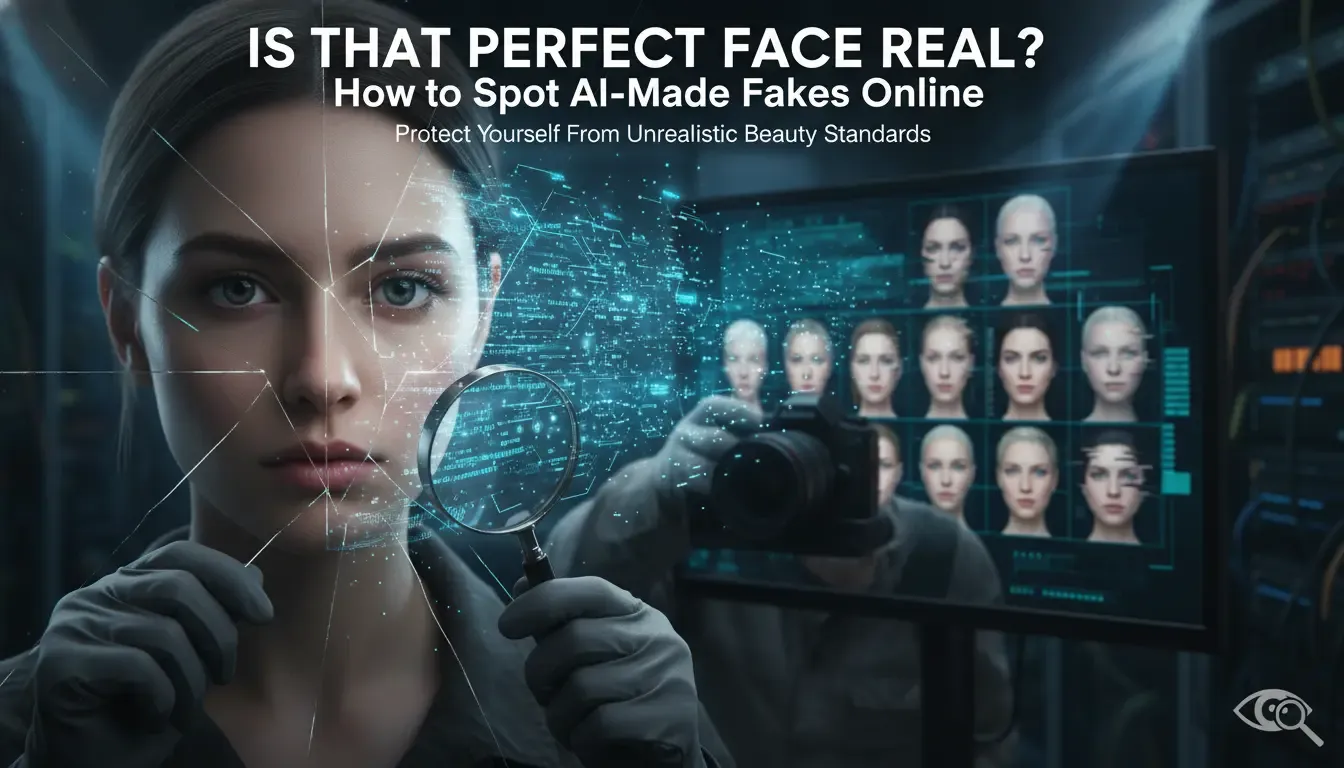
You're scrolling through social media, seeing countless flawless faces. You see perfect skin, sparkling eyes, and bodies that look sculpted from marble. You might feel a pang of envy, or wonder why you don't look like that. But what if many of those perfect images aren't real people, or at least, not entirely real?
It's true. Computer programs, often called AI, are making it easier than ever for people, including influencers, to change how they look in photos and videos. These programs are designed to create or change images. This goes way beyond a simple photo effect. We're talking about advanced changes that can redraw a face, reshape a body, and create an image that looks stunning, but is actually a clever fake.
The Rise of the "Too Perfect" Look
Social media has always been a place where people show their best selves. From carefully chosen angles to simple photo effects, we've all seen how images can be improved. But today's AI programs take this to a whole new level. They can act like a computerized plastic surgeon, making someone's face smoother, their eyes bigger, or their waist smaller, all with just a few taps. It's like having a professional editor in your pocket who can instantly perfect every detail.
Why Do Influencers Use These Tools?
There are many reasons why someone might use AI to change their appearance online. Understanding these reasons can help you see the bigger picture.
- Pressure to be perfect: The online world often demands an impossible standard of beauty. Influencers feel this pressure intensely, believing they must look flawless to succeed. They might think that any imperfection could cost them followers or opportunities.
- Brand deals: Many brands want to work with influencers who project a certain image. This image is often one of flawless beauty and aspirational perfection. Using AI can help influencers meet these strict requirements, securing lucrative partnerships.
- More engagement: Photos that look "perfect" often get more likes and comments. This increased interaction helps influencers grow their audience and boosts their visibility on social media platforms. It's a cycle where perfection is rewarded.
- Easy access: These powerful AI programs are becoming simple to use. Many are available as apps on a smartphone, making advanced editing accessible to almost anyone. You don't need to be a tech expert to make significant changes.
The Real-World Impact on You
When you constantly see these AI-made images, it can subtly change your view of what's normal or beautiful. You might start comparing yourself to these fake ideals, leading to feelings of sadness, low self-esteem, or even anxiety. You might wonder why your skin isn't as smooth or your body isn't as sculpted. It's important to remember that these images often represent a digital fantasy, not reality. Your worth is not defined by an impossible standard set by a computer program.
How AI Programs Work Their Magic
Think of old photo editing. You might brighten a picture or remove a red-eye. Modern AI goes much further. It uses complex math to understand what a "face" or "body" should look like. Then, it can redraw parts of the image to match a chosen ideal. It can smooth skin, change facial features, or even alter the lighting in ways that look incredibly natural, even though they are fake. These programs manipulate the tiny dots that make up a picture, called pixels, to create a new version of reality.
These computer programs can:
- Reshape faces: They can make noses smaller, lips fuller, or jawlines sharper. They can even change the entire structure of someone's face to fit a popular beauty standard.
- Smooth skin: They remove every pore, blemish, or wrinkle, creating a doll-like appearance. Your skin might look like smooth, unblemished plastic, completely lacking natural texture.
- Alter body shape: They can slim waists, add muscle, or lengthen legs. This can create proportions that are physically impossible for a real human body.
- Change lighting: They can make it look like a professional studio shot, even if the original photo was taken in a dim room. This creates a polished look that can be very deceiving.
"Quick Tip: AI programs are not just about adding a pretty overlay. They often change the actual tiny dots that make up the image. This makes it hard to tell where reality ends and the digital trick begins."
Key Signs to Look For: Your AI-Spotting Checklist
Spotting AI-made images can be tricky, but there are often tell-tale signs if you know what to look for. Here's your checklist to become a smart spotter and protect your perception of reality:
1. The Skin is Too Perfect
Real skin has pores, tiny lines, and slight imperfections. If someone's skin looks like smooth, flawless plastic, like a mannequin's or a porcelain doll's, it's a big red flag. AI often over-smoothes, losing all natural texture. You won't see any slight redness, no visible pores, just an unnatural sheen that looks utterly fake.
2. Unnaturally Bright or Large Eyes
AI programs love to enhance eyes. They might appear too big for the face, unnaturally bright, or have strange reflections that don't match the light source in the rest of the picture. Sometimes the whites of the eyes are too white, or the pupils are too perfectly round, almost like cartoon characters. You might also notice an artificial sparkle that looks out of place.
3. Hair Looks Painted or Too Flawless
Real hair has flyaways, different strands, and natural movement. AI-made hair can look like a solid block of color, too shiny, or painted onto the head without any individual strands visible. It lacks the natural frizz or texture we all have. You might see hair that looks unnaturally perfect, without a single strand out of place, even in a windy setting.
4. Distorted or Wavy Backgrounds
This is one of the biggest giveaways. When AI reshapes a person, it often messes up the things around them. Look for:
- Wavy lines: Straight lines in the background, like doorframes, tiles, or lampposts, might appear bent or wobbly, almost like heat haze distorting a distant road. This is because the AI stretched or squeezed the background to make the person look different.
- Blurry spots: Areas near the person might be oddly blurred or stretched, as if the AI struggled to fill in the gaps after making changes.
- Repeated patterns: A brick wall or a patterned wallpaper might have strange, repeating, or distorted sections where the AI tried to fill in gaps. These patterns might not line up correctly or could look strangely uniform.
5. Hands, Fingers, and Body Parts Look Odd
AI is getting better, but hands and fingers are still hard to get right. Look for:
- Too many or too few fingers. This is a classic sign, as AI struggles with complex anatomical details.
- Weirdly long or short fingers. They might look stretched or squashed.
- Blurry or distorted hands compared to the rest of the image, suggesting the AI didn't quite finish rendering them.
- Unnatural joints or angles, making the hand look stiff or rubbery.
- Body parts that don't quite connect or seem out of proportion. For example, an arm might look too long for the torso.
6. Jewelry or Accessories Seem to Float
Sometimes, earrings or necklaces might not sit quite right on the skin, or they might look like they are floating slightly off the body. This happens when the AI tries to reshape the person but doesn't perfectly adjust the items they are wearing. You might also notice accessories that look unnaturally sharp or blurred compared to the rest of the image.
7. Unrealistic Lighting and Shadows
Does the light source in the picture match the shadows on the person? If the light seems to be coming from the front, but the shadows are cast behind them in a strange way, or if there are no shadows at all where there should be, it could be AI at work. Real light creates consistent shadows, so inconsistencies are a big clue.
8. The "Uncanny Valley" Feeling
This is when something looks almost human, but just enough off to make you feel uncomfortable. You might not be able to pinpoint exactly what's wrong, but your brain knows it's not quite right. It's like looking at a very realistic doll that somehow feels unsettling. This is a common feeling when looking at AI-generated or heavily AI-modified faces because they lack the subtle nuances of real human expression.
Here's a quick summary of what to check:
| What to Look For | Signs of AI-Made Changes |
|---|---|
| Skin Texture | Too smooth, plastic-like, no pores, looks airbrushed. |
| Eyes | Unnaturally large or bright, strange reflections. |
| Hair | Looks painted on, too perfect, no individual strands. |
| Background | Wavy lines, distortions, blurry spots, repeated patterns. |
| Hands & Fingers | Odd number, blurry, strange shapes or joints. |
| Lighting/Shadows | Don't match, or seem to come from nowhere. |
| General Feeling | Something just feels "off" or fake. |
Beyond the Face: AI Body Shaping
It's not just faces. AI programs can also make big changes to a person's body. An influencer might appear to have an impossibly tiny waist, incredibly long legs, or perfect muscle definition that seems too good to be true. Again, look at the background. If a doorway or a tiled floor near their body is bent or stretched, it's a sign that their body shape has been digitally altered. These changes can create an ideal that is simply unattainable for most people, leading to unfair comparisons for you.
The "Always Perfect" Problem
Real people have good days and bad days. Their hair isn't always perfect, they have blemishes, and they sometimes look tired. If every single photo an influencer posts shows them looking absolutely flawless in every way, it's a huge red flag. This consistent perfection is usually a sign of heavy editing, often with AI. Your own experience tells you that nobody is perfect all the time, so consistent flawlessness online should raise your suspicion.
A Realistic Example: "Fitness Guru Flex"
Imagine you follow a popular fitness influencer named "Flex." Every photo shows him with perfectly chiseled abs, bulging biceps, and not a single drop of sweat or pore visible. His gym selfies are always in front of pristine, perfectly straight walls. You might feel inspired, but also a little discouraged, wondering how he maintains such an unrealistic physique. You might even push yourself harder at the gym, trying to achieve an impossible standard.
One day, a fan posts a candid photo with Flex at a fitness expo. In this unedited picture, Flex looks great, but his abs aren't quite as defined, his skin has normal texture, and he just looks... well, human. Suddenly, you realize the "perfect" Flex you saw online was heavily changed by AI. This isn't to say Flex isn't fit, but the online version was an AI-assisted fantasy. This kind of discovery can be disappointing, but it also helps you understand that what you see online is often a carefully constructed image, not necessarily the full truth. It helps you reset your expectations and feel better about your own body.
Why Does This Matter to You?
Understanding these AI tricks is more than just curiosity. It protects your mental well-being and helps you make smarter choices online. Your ability to spot fakes is a powerful tool in today's digital world.
- Mental Health: Constantly comparing yourself to fake perfection can harm your self-esteem. Knowing an image is AI-made helps you put it in perspective. It reminds you that you are comparing yourself to a computer-generated ideal, not a real person. This can alleviate feelings of inadequacy and promote a healthier self-image.
- Consumer Trust: If an influencer is promoting products while using AI to create an unrealistic image, are they being truly honest? It makes you question the authenticity of their endorsements. If they are willing to fake their appearance, what else might they be misleading you about? Your trust in their recommendations should be carefully considered.
- Media Literacy: In a world full of AI-made fake videos or images, being able to spot these subtle signs is a key skill. It helps you understand what's real and what's not, not just with influencers, but with all kinds of images and videos you see online. This critical thinking protects you from misinformation and allows you to form your own informed opinions. Learn more about spotting fakes in general at our video detection guide.
What You Can Do Right Now
It's easy to feel overwhelmed by all the fake content online, but you have the power to protect yourself. Here are some simple steps you can take today to navigate the digital world with confidence:
- Be a Smart Scroller: Approach every image with a healthy dose of doubt. If it looks too perfect, it probably is. Don't let flawless images make you feel bad about yourself. Remember that much of what you see online is curated and often enhanced.
- Look for the "Tells": Use the checklist above. Train your eyes to spot the blurry backgrounds, the plastic skin, and the weird hands. These small details can reveal big deceptions. The more you practice, the better you'll become at identifying these subtle clues. Our image analysis tools can help you look closer.
- Use Reverse Image Search: If you're really suspicious about an image, try searching for it on Google Images or other tools. Sometimes, a heavily edited image might have an original, unedited version elsewhere that reveals the truth. This can be a powerful way to uncover the original source. Check out our how-it-works page for more tools.
- Follow Diverse Accounts: Make an effort to follow people who show more realistic content. Look for influencers who embrace their imperfections, or who are transparent about their editing process. This helps balance your feed and gives you a more grounded view of reality, promoting healthier self-comparison.
- Question Everything: Don't just accept what you see at face value. Ask yourself: "Does this look real? Could this be AI?" This critical thinking is your best defense against online deception and helps you become a more informed digital citizen.
Frequently Asked Questions
Is it wrong for influencers to use AI programs?
It's a tricky question. Many argue that it's okay if they are open about it and clearly label their content as AI-made or heavily edited. The problem arises when AI is used to create a completely fake reality without telling anyone, especially when it affects how others feel about themselves or influences buying decisions. Transparency is key.
Can AI programs make someone look completely different?
Yes, absolutely. Advanced AI programs can dramatically alter facial features, body shape, and even create entirely new facial expressions or poses. They can make someone look like a completely different person, or an idealized version that is far from their real self. The changes can be so profound that the original person is barely recognizable.
Are there tools to detect AI-made images?
Yes, there are a growing number of tools designed to help spot AI-generated or heavily edited images. While none are 100% perfect, they can often highlight inconsistencies or tell-tale signs that humans might miss. These tools analyze various aspects of an image to identify digital manipulation. Truth Lenses offers tools and guides to help you identify AI-made fake videos and images.
Stay safe and smart online by using the tools and knowledge at Truth Lenses to understand what's real and what's not. Your ability to discern truth from fiction is more important than ever.