You're scrolling through your social media feed. Suddenly, you see a shocking video. Perhaps it shows a politician saying something truly outrageous. Or maybe it's a celebrity doing something completely unbelievable. Your first thought is probably, "Is this real?" In today's fast-paced digital world, that question is more important than ever. It's also becoming much harder for you to answer with real confidence.
Think about your daily online experience. Every day, you encounter countless images, videos, and audio clips. How do you know what to trust? The line between what's real and what's made by computers is blurring rapidly. This makes it challenging for all of us to navigate the digital landscape safely.
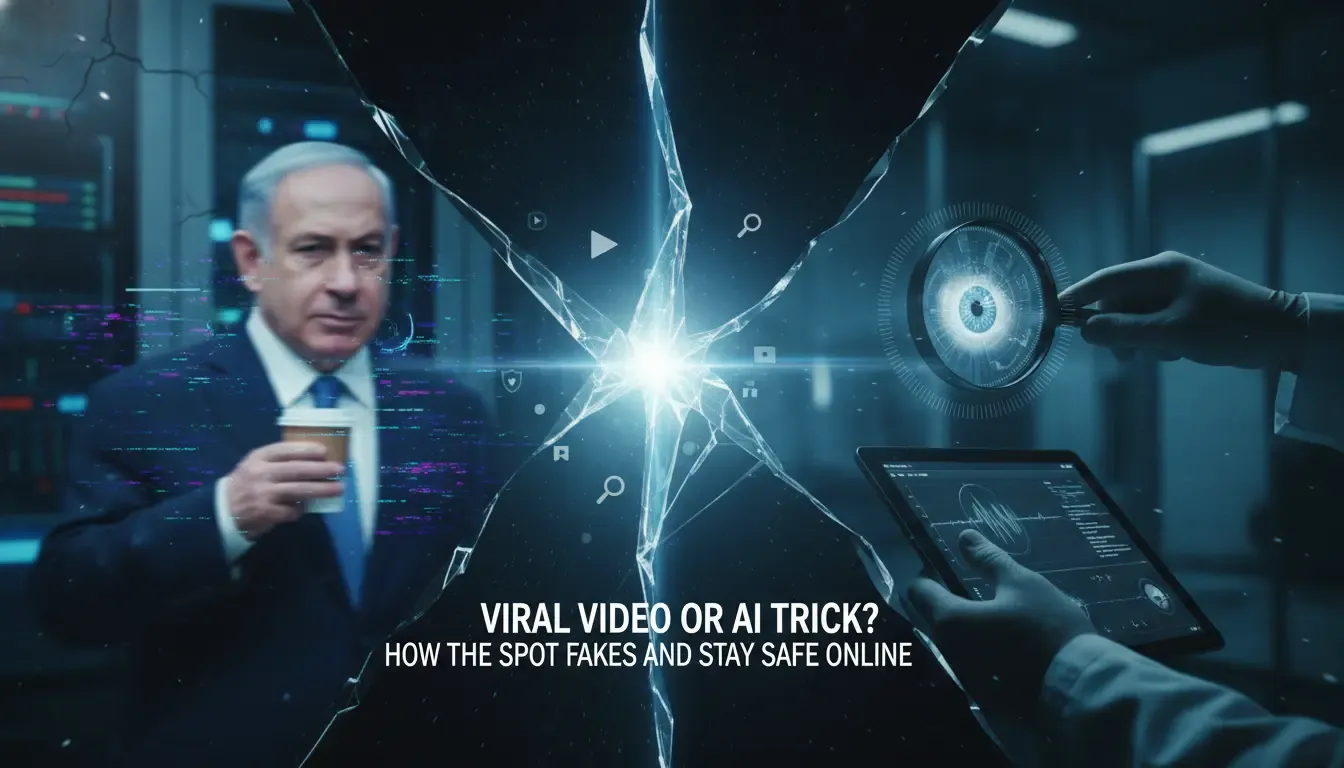
Recently, a simple video of Israeli Prime Minister Benjamin Netanyahu having coffee went viral. But it wasn't for the reason you might expect. Instead, many posts quickly spread across social media. These posts claimed the video was completely fake. They said it was made by artificial intelligence, or AI, to cover up something else. People argued intensely. They debated whether it was a genuine moment or a cleverly crafted deception.
This incident, while not as dramatic as some other computer-made fake videos, perfectly shows a big problem. It highlights how easily doubt can spread. This happens especially when AI-made fakes are so common and believable. It makes you wonder, "Can I trust my own eyes and ears anymore?"
The Coffee Video Controversy: A Real-World Example of Doubt
Imagine seeing a video of a world leader in a casual setting. It feels normal, right? You might not think twice about it. But then, comments and shares start pouring in. People begin to say, "This is clearly made by AI! Look at their eyes!" or "They're trying to fool us!" This is exactly what happened with the Netanyahu coffee video.
The video itself was quite harmless. It simply showed him with a cup of coffee. However, in our current climate of fast news and strong opinions, some users quickly jumped to conclusions. They claimed the video was a "computer-made fake video." They believed it was designed to mislead the public. These claims spread rapidly. They were fueled by a general distrust of online information. They also capitalized on the known power of AI to create fake content. It's easy to see how quickly these suspicions can take hold.
Quick Tip: Just because something looks slightly off doesn't automatically mean it's an AI-made fake. Your brain is wired to find patterns. Sometimes you might see things that aren't truly there. This is especially true when you are actively looking for them. Don't jump to conclusions too fast.
It turned out the video was not made by AI. It was a real clip from a legitimate news source. However, the damage was already done. Many people had already seen and believed the false claims. This incident wasn't about a sophisticated AI attack. Instead, it was about how quickly unverified claims can spread. It also showed how easily people suspect AI when they see anything they don't like or don't fully understand. This experience can make you question everything you see online.
How AI Makes Fakes So Convincing
Computer programs that use artificial intelligence have become incredibly powerful. They are also surprisingly easy for almost anyone to use. What used to take a team of highly skilled special effects artists can now be done by someone with a basic computer. Let's explore how these convincing fakes are made.
AI learns by analyzing vast amounts of real data. It studies how people look, move, and talk. Then, it uses this knowledge to generate new content. This content is designed to mimic reality so closely that it becomes nearly indistinguishable from genuine footage. The AI doesn't just cut and paste. It understands how light falls on a face, how expressions change muscles, and how a person's head moves naturally.
Fake Videos, Often Called Deepfakes
Think of a computer-made fake video as an advanced digital puppet show. Special computer programs learn how a person looks, moves, and talks. They do this by watching hours and hours of that person's real videos. Then, the AI can make that person appear to say or do anything you want. It can swap faces with another person. It can change their facial expressions. It can even put a person into a completely different scene. The most unsettling part is how incredibly real these fake videos look. They can be very hard to distinguish from genuine footage.
- Face Swaps: This involves taking one person's face and digitally placing it onto another body in a video. Imagine your friend's face appearing on a famous actor's body. The AI carefully matches skin tones, lighting, and even the tiny movements of facial muscles. This makes it incredibly hard to tell it's not the original person.
- Voice Clones: These programs copy someone's voice perfectly. Then, the AI can make that person say entirely new things. It's like having a perfect voice impersonator on demand. They can mimic tone, accent, and even emotional inflections. A scammer could use your child's voice to call you, pleading for money in an emergency, making it sound utterly convincing.
- Body Movements: AI can make a person move in ways they never actually did. This is all done through computer magic. It can make someone dance, run, or gesture differently. The movements can look incredibly natural, even if they are completely fabricated. The AI learns the physics of human motion to create believable, yet fake, actions.
Fake Audio, or Voice Clones
Have you ever received a phone call from someone who sounds exactly like your boss? They might ask you to urgently send money or share sensitive information. That could very well be an AI voice clone. These powerful programs can listen to a short sample of someone's voice. Sometimes, just a few seconds are enough. Then, they can generate entirely new sentences in that exact voice. It's a perfect imitation. This technology can be used for harmless fun, but it also poses serious risks for scams and deception. You might hear a loved one's voice, but it's not really them speaking. You might hear slight digital artifacts, like a subtle metallic echo or an unnatural crispness, but these are becoming rarer.
Fake Photos
AI can also change photos in ways that are extremely difficult for you to spot. It can add or remove people from a picture. It can change backgrounds completely. It can even create entirely new, fake people who look perfectly real. These are not just simple edits. They are complex manipulations that can fool your eyes into believing a picture is genuine when it has been heavily altered by a computer program. For example, AI can add a crowd to an empty street, change the weather in a landscape photo, or even subtly alter reflections and shadows to create a false reality.
Why This Matters to You
This issue isn't just about politicians or celebrities. AI-made fakes can affect your daily life in many significant ways. Understanding these risks is crucial for your online safety and peace of mind.
- Scams and Fraud: You might receive a fake phone call from a loved one. They could be asking for money in an emergency. Or you might get a video call from your boss with urgent demands that aren't real. These fakes are designed to exploit your trust and urgency. They trick you into giving away money or sensitive personal information. Imagine getting a call from your child's voice, pleading for help, but it's an AI imitation.
- Spreading False Information: Computer-made videos and audio can spread wrong information. This could be about elections, public health, or local events. This makes it incredibly hard for you to know what's true and what's false. This false information can sway public opinion. It can even cause real-world harm and social unrest.
- Damage to Your Reputation: Someone could create a fake video or audio clip of you. They might make it seem like you said or did something you never did. This could cause serious harm to your personal image or your business's reputation. It's a powerful and malicious tool for smear campaigns, gossip, or even blackmail.
- Erosion of Trust: When everything you see or hear online can potentially be faked, it becomes harder to trust anything. This constant doubt can make you feel anxious and uncertain about the information you consume. It undermines our ability to have shared facts and discussions. It can also make you question genuine media.
- Identity Theft: Sophisticated AI fakes could potentially be used to trick facial recognition or voice authentication systems. This could give criminals access to your accounts or personal data. Protecting your digital identity is more important than ever. Criminals could use a fake version of you to bypass security measures.
Simple Ways to Spot AI-Made Fakes
While AI is getting better at creating fakes, there are still clues you can look for. Think of yourself as a digital detective. You can train your eyes and ears to spot inconsistencies. Here are some specific things to check.
Look for Visual Clues
When you are watching a video or looking at a photo, pay very close attention to these details. Your careful observation can make a big difference in unmasking deception.
- Blurry Edges or Odd Lighting: Does the person's face look too smooth, almost artificial? Are the edges of their face a bit blurry or pixelated compared to the background? Does the lighting on their face seem to mismatch the lighting in the rest of the scene? For example, if the background is brightly lit, but the person's face is in shadow, that's a red flag. Look for shadows that don't make sense or appear to be missing.
- Strange Eye Movements: People blink at a normal, irregular rate. Computer-made fakes sometimes have strange or infrequent blinking. Their eyes might not quite look natural. Do their pupils seem to change size weirdly without a clear reason? Do their eyes dart around too much, or stare too fixedly? Sometimes, the eyes might not track naturally with the head's movement, or appear glassy and lifeless.
- Unnatural Mouth Movements: Watch their lips very carefully. Do they perfectly match the words being spoken? Sometimes, AI-generated speech can have slightly off lip-syncing. The mouth shapes might not look quite right for the sounds being made. The lips might appear rubbery or stiff. You might notice a slight delay between the sound and the mouth movement, or teeth that look too perfect or strangely aligned.
- Inconsistent Features: Does a person's hair or jewelry suddenly change position or appearance? Do moles, birthmarks, or glasses seem to appear and disappear? Look for small details that don't stay consistent throughout the video or image. Even subtle changes in clothing or background objects can be a giveaway. Your detective skills are key here.
- Weird Skin Texture: Sometimes, AI can make skin look too perfect, almost like plastic. It might be too smooth, lacking natural pores or blemishes. Other times, you might see strange blotches, distortions, or an unnatural sheen on the skin. The skin might not react realistically to light or movement, giving it an "uncanny valley" effect where it looks almost human, but disturbingly not quite.
- Unnatural Head or Body Posture: Does the person's head seem to be at an odd angle compared to their body? Do their shoulders or neck look stiff or disconnected? AI can sometimes struggle to render natural body physics, leading to awkward poses or movements. Look for stiffness or disproportionate body parts.
Listen for Audio Clues
When you are listening to audio or watching a video with sound, pay close attention to the voice and background. These subtle cues can reveal a lot.
- Robotic or Flat Voice: Does the voice sound a bit monotone, like a computer is talking? Does it lack natural emotion, pitch changes, or pauses? Human speech has a natural rhythm. AI-made voices can sometimes sound too perfect or too bland. You might notice an unnatural crispness or a slight digital echo.
- Odd Pauses or Word Emphasis: Does the person pause in strange places? Do they put emphasis on the wrong words? Natural speech flows differently. You might notice awkward silences or words that are stressed unnaturally. Listen for any breaks in the natural rhythm of speech.
- Background Noise: Does the voice sound too clean, without any natural background noise that should be there? Or does the background noise cut out abruptly when the person speaks? In real recordings, you often hear ambient sounds. A sudden silence around the voice can be a sign of alteration. This indicates the audio might have been edited.
- Mismatched Lip-Sync (again): Even if the voice sounds real, does it perfectly match the mouth movements you see? Sometimes the sound and video are just a little bit off. This is a common flaw in many computer-made fake videos. The lips might move too fast or too slow for the words, or the shapes might not correspond accurately.
Check for Context Clues
Beyond what you see and hear, it's vital to think about the situation and the source of the information. This is where your digital detective skills truly shine.
- Source, Source, Source: Who originally posted this content? Is it a reputable news organization with a history of accuracy? Or is it an unknown social media account with very few followers? If a friend shared it, where did they get it? Always try to trace the information back to its original source. Be very wary of anonymous accounts or those with no history.
- Emotional Language: Is the caption or accompanying text designed to make you feel angry, scared, or extremely excited? Computer-made fakes and false information often rely on strong emotions. These emotions encourage you to share quickly without thinking critically. If it feels like it's trying to manipulate your feelings, be cautious. It's a common tactic to bypass your logic.
- Too Good/Bad to Be True: If something seems absolutely unbelievable, it probably is. Your brain often wants to believe sensational things. But common sense tells you that extraordinary claims require extraordinary evidence. If it sounds like a miracle or a disaster, question it deeply. Trust your gut feeling if something seems off.
- Cross-Reference: Can you find this story or video reported by multiple, trusted news sources? If only one obscure source has it, be very skeptical. Also, be wary if different sources have vastly different details. A lack of corroboration from established media outlets is a major red flag. Think of it as gathering evidence from multiple witnesses.
- Check the Date: Is the video or image old content being presented as new? Sometimes, old media is repurposed to spread false narratives. Always check the timestamp or publication date if available. Old content in a new context can be very misleading.
Real vs. Fake: A Quick Comparison for Your Reference
Let's put it all together. Here's a quick guide to help you compare real content with computer-made fakes.
| Feature | Real Video/Audio | AI-Made Fake Video/Audio |
|---|---|---|
| Eyes | Natural blinking, consistent gaze, realistic reflections, pupils react to light. | Infrequent blinking, unnatural gaze, odd pupil changes, eyes might look lifeless or too perfect, reflections might be off. |
| Mouth/Lips | Smooth, natural movement, perfect sync with audio, natural lip texture. | Stiff, unnatural movement, slightly off lip-sync, rubbery appearance, odd shapes for certain sounds, teeth might look strange. |
| Skin | Natural texture, shadows, subtle blemishes, reacts to light and movement. | Too smooth, blurry, inconsistent lighting, strange blotches or distortions, lacks natural pores or wrinkles, unnatural sheen. |
| Voice | Natural tone, emotion, varied pitch, natural pauses and rhythm. | Robotic, flat, monotone, odd emphasis on words, strange pauses, lacks natural emotional range, sometimes a slight echo or metallic sound. |
| Background | Consistent, natural interaction with foreground, realistic depth and perspective. | Blurry, distorted, inconsistent with person's lighting or movement, objects might appear or disappear, perspective might be off. |
| Source | Reputable news organizations, official channels, verified accounts. | Unknown accounts, sensationalist websites, anonymous posters, accounts with no history. |
| Overall Feeling | Feels authentic, passes closer inspection, nothing seems "off" after careful review. | Something feels "off," an "uncanny valley" effect, makes you feel uneasy, fails closer inspection with inconsistencies. |
The Human Element: Why We Fall for Fakes
It's not just about how good the computer-made fakes are. It's also about how your brain works. We are wired in ways that can make us vulnerable to deception. Understanding these mental shortcuts can help you protect yourself.
- Confirmation Bias: You tend to believe information that already fits with what you think or want to believe. If a fake video confirms your existing opinion, you are much more likely to accept it without question. You might even actively look for reasons to believe it. This makes you less critical of content that supports your views.
- Emotional Triggers: Fake content often plays on strong emotions. These include fear, anger, excitement, or even humor. When you are emotional, you are less likely to think critically. You are more likely to share something quickly without verifying it. Scammers know this and create content designed to provoke a strong emotional reaction from you.
- Information Overload: You are bombarded with so much information online every single day. It's exhausting to verify everything you see. So, you sometimes take mental shortcuts. You might believe what's presented to you without deep investigation. This is a natural response to the sheer volume of digital content.
- Trust in Our Eyes and Ears: For most of human history, seeing was believing. Your brain isn't naturally equipped to suspect what you see with your own eyes. It could be completely fabricated by a computer. You have to actively override this natural inclination and cultivate skepticism.
- Social Proof: If many of your friends or people you respect are sharing something, you might be more inclined to believe it. This is called social proof. It makes you think, 'If everyone else believes it, it must be true.' This can accelerate the spread of false information, especially within your trusted networks.
- Novelty Bias: New, shocking, or unusual information often grabs your attention more effectively. Computer-made fakes are often designed to be sensational. This makes them more likely to go viral. Your brain is drawn to novelty, which can make you less critical of truly outlandish claims.
What You Can Do Right Now
Protecting yourself and others from AI-made fakes is a shared responsibility. You have the power to make a difference. Here are 5 simple, actionable steps you can take today to become a smarter online citizen.
- Pause Before You Share: Before you click that share button, take a moment. Stop and think. Ask yourself if the information seems too extreme, too perfect, or simply unbelievable. A few seconds of doubt and critical thinking can stop a lot of false information from spreading further. Don't let your emotions rush your judgment.
- Check the Source Carefully: Who originally posted this content? Is it a well-known, trusted news organization with a history of accuracy? Or is it an unknown social media account, perhaps with very few followers or a suspicious name? Always look for official channels. If a friend shared it, politely ask them where they got it. Learn more about checking sources and developing your understanding of media at truthlenses.com/blog.
- Look for the Clues We Discussed: Use the tips above as your personal checklist. Pay close attention to eyes, mouths, lighting, and audio. Does anything feel "off" or unnatural? Even small inconsistencies can be a sign that the content has been manipulated by a computer. Train your eyes and ears to spot these subtle giveaways.
- Cross-Reference the Story: Search for the same story or video on other reputable news sites. Use a search engine and look for reports from multiple, established media outlets. If no one else is reporting it, be very skeptical. Also, be wary if different sources have vastly different details. A lack of consistent reporting is a major red flag. For checking images, you can visit truthlenses.com/image.
- Consider Using Verification Tools: Tools like Truth Lenses can help you analyze images and videos for signs of manipulation. While no tool is foolproof, they can add an extra layer of defense in your fight against deception. They can help you identify digital alterations that are hard for the human eye to spot. Learn how our tools work and how they can assist you at truthlenses.com/how-it-works.
Frequently Asked Questions
What is a computer-made fake video in simple terms?
A computer-made fake video, often called a "deepfake," is a highly realistic fake video or audio clip. It is created using powerful computer programs, also known as Artificial Intelligence or AI. These programs learn a person's face, voice, and movements by studying hours and hours of their real videos. Then, they use this knowledge to generate entirely new, fake content. In this fake content, that person appears to say or do things they never actually did. Think of it as a highly sophisticated digital puppet show, where the puppet looks and sounds exactly like a real person, making it incredibly difficult to tell it's not genuine.
Can I really trust anything I see online anymore?
It's true that it's getting significantly harder to trust everything you see online. However, yes, you absolutely can still find trustworthy information. The key is for you to become a more critical consumer of digital content and to apply a healthy dose of skepticism to everything you encounter. Don't blindly believe everything you see or hear. Always check the source of information. Look for inconsistencies in the content itself. Cross-reference information with multiple trusted news outlets. Think of it as developing stronger "online smarts" or becoming a digital detective to navigate the digital world safely and confidently. You have to be an active participant in verifying what you consume, rather than a passive recipient.
How fast are these AI-made fakes getting better?
AI technology is improving at an incredibly rapid and sometimes alarming pace. What was clearly noticeable as a fake a year or even six months ago might be nearly impossible for the average person to spot today. This rapid improvement means that our methods for spotting fakes also need to evolve constantly. That's why staying informed about the latest tricks used by AI and utilizing verification tools are so important for your protection. The technology is always advancing, so your vigilance and your tools must keep pace to effectively counter deception.
Staying informed and using the right tools can help you navigate the tricky waters of online deception. We encourage you to visit Truth Lenses to explore our tools for verifying media and protecting yourself from fakes. Your ability to spot fakes is crucial in today's digital landscape.