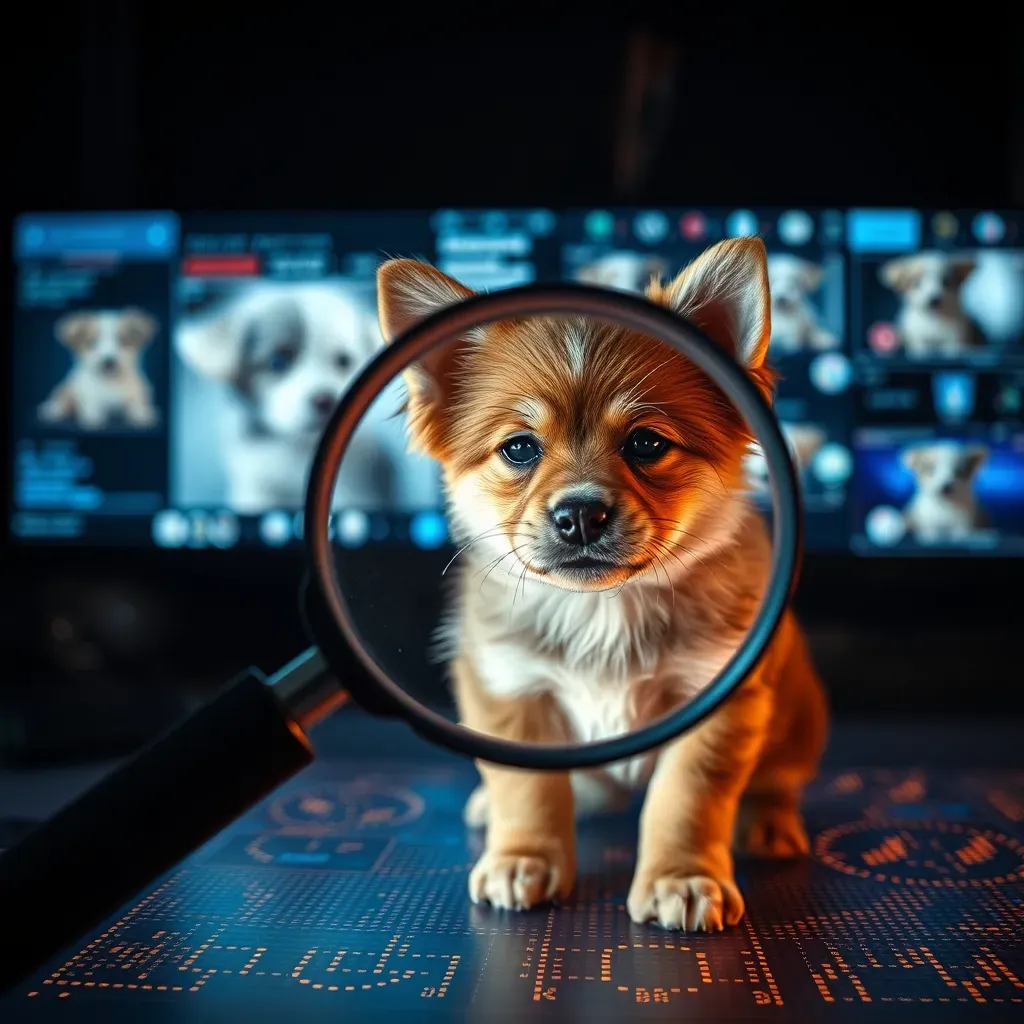
Voice cloning fraud and digital scams hit record highs last year, but a quieter trap is catching animal lovers like you off guard. According to a 2025 report by the Better Business Bureau, online pet adoption scams surged by 150 percent. Scammers now rely heavily on artificial intelligence to generate heartbreakingly cute puppy and kitten photos that do not exist in real life. If you are searching for a new furry family member online, this guide will help you protect your wallet and your heart. Imagine sitting on your couch on a rainy Tuesday evening. You feel the harsh glare of the smartphone screen lighting up your dark living room. You scroll through a local classifieds site or a social media group. There, staring back at you with huge brown eyes, is the most adorable golden retriever puppy you have ever seen. The price is surprisingly low. The listing says the owner just wants a good home for the puppy because they recently moved. You feel an instant wave of warmth and excitement. You reach out to the poster, and within minutes, they reply asking for a small deposit via a peer-to-peer payment app to hold the puppy. Before you type your credit card numbers or transfer your hard-earned cash, you need to know how these scams work. Understanding the Threat of AI Pet Scams. Artificial intelligence tools have advanced so quickly that anyone can type a few words and generate a hyper-realistic image of a cat or dog in seconds. Scammers take advantage of our natural empathy toward animals. They know that when you see a cute animal in need of a home, your logical defenses drop. Research from the Canadian Anti Fraud Centre and the Federal Trade Commission shows that pet scams are among the most financially damaging retail fraud types. Victims often lose anywhere from three hundred dollars to over two thousand dollars in total fees. These fake sellers invent endless reasons why you must pay before meeting the animal. They ask for shipping fees, special vaccination crate costs, or insurance fees that never end. Why AI Pets Look So Convincing. Early computer-generated images were easy to spot because they had extra limbs, blurry backgrounds, or weird human teeth. Modern generation software has largely fixed those obvious errors. Today, fake pets have soft fur, wet noses, and expressive eyes. However, the technology still leaves microscopic digital footprints that you can spot if you know where to look. Let us look at the differences. Feature: Real Pet Photo versus AI-Generated Pet Photo. Background Details for real photos show consistent lighting, normal objects, and sharp text on signs. Background Details for AI photos show warped furniture, melting walls, and nonsensical background objects. Fur and whiskers for real photos show individual hairs visible and a natural falling pattern. Fur and whiskers for AI photos show smudged edges, floating fur tufts, and an unnaturally glossy coat. Eyes and reflections for real photos show natural catchlights matching room lighting. Eyes and reflections for AI photos show mismatched reflections, pupil size distortions, and blank stares. A Real Case Study: The Golden Retriever Loss. To understand how devastating these scams can be, look at a documented case from the Better Business Bureau Scam Tracker. A family in Ohio was searching online for a golden retriever puppy to comfort their young daughter after a family loss. They found a website called Sunshine Golden Retrievers that featured glowing testimonials and pictures of playful puppies running in green grass. The family contacted the seller via WhatsApp. The seller sent videos that looked real, showing cute golden retriever puppies tumbling around a pen. Convinced the operation was legitimate, the family wired four hundred dollars for the puppy adoption fee plus one hundred fifty dollars for special temperature-controlled air transport. Over the next week, the fake seller sent messages claiming the airline required a refundable pet crate insurance fee of eight hundred dollars. When the family hesitated, the scammer threatened to abandon the puppy at the airport without food or water. You can almost imagine the metallic smell of airport cargo holds that the scammer describes to create fake panic. Panicked, the family paid the extra money. Total losses exceeded thirteen hundred dollars before the family realized the website vanished and the tracking numbers were fake. You might even experience the quiet beep of a failed money transfer or notice your bank balance dropping during such an ordeal. Security experts later confirmed the original puppy photos and videos were entirely synthetic creations generated by neural networks. The Anatomy of an AI Pet Listing. Scammers follow a predictable playbook. Recognizing these red flags can save you from financial ruin. Prices That Feel Too Good to Be True. If a purebred puppy that normally costs two thousand dollars is listed for two hundred dollars under the guise of a rehoming fee, pause and think twice. Refusal to Meet in Person. The seller always has a tragic excuse for why you cannot visit the puppy. They claim to be deployed overseas, working on an oil rig, or recently relocated due to a family emergency. Unusual Payment Demands. Real shelters and reputable breeders accept credit cards or standard checks. Scammers demand payment via gift cards, cryptocurrency, Zelle, Venmo, or wire transfers with no buyer protection. High Pressure Tactics. They rush you by claiming another family is waiting to take the animal if you do not pay immediately. How to Inspect Photos Like a Digital Detective. Before you fall in love with an online animal picture, put on your detective hat. You do not need expensive software to verify authenticity. You just need a web browser and a few free tools. The Power of Reverse Image Search. Scammers are lazy. They often steal images from stock photography sites, Instagram accounts of real pet influencers, or older scam postings. A reverse image search allows you to upload the pet photo into a search engine to see where else it appears online. First, use Google Lens. Open Google on your computer or phone. Click the camera icon in the search bar. Upload the screenshot of the pet photo. Google will scan the web for matching or visually similar images. Second, use TinEye. Go to tineye.com. Upload the pet photo. TinEye tracks where the exact image has traveled across the internet. If the photo was published on a stock image site in 2021, you know the puppy listing is a fraud. Spotting Digital Anomalies in the Fur and Eyes. If the reverse image search turns up nothing, look closely at the image itself. Open the photo and zoom in to four hundred percent. Check the background. AI struggles with background logic. Look at fence posts, doorframes, and carpets. Do lines bend where they should be straight? Are background objects melting into each other? Examine the eyes. Look closely at the reflections in the animal's eyes. In a real photo taken indoors, you might see the shape of a window or a photographer standing with a phone. In AI images, the reflections in the left eye often do not match the reflections in the right eye. Look at the whiskers and ears. AI often struggles with fine wispy details. Whiskers might blend directly into the cheek without a clear root. Ear edges might look airbrushed or blurred out. You can picture gently touching the texture of a wet puppy nose in your mind, but a fake photo lacks those real physical details. ## What You Can Do Right Now. Run Google Lens. Take a screenshot of the pet photo and run it through Google Lens to check for stock photo origins. Demand a video call. Ask the seller to get on a live FaceTime or Zoom call and show the puppy moving around in real time while holding a specific object like a spoon. Use protected payment methods. Only pay with a credit card that offers fraud protection. Never use wire transfers or peer-to-peer apps for unknown sellers. Check official rescues first. Visit your local animal shelter or check Petfinder, where pets can be viewed and adopted in person safely. Report suspicious listings. If you spot a scam, report it immediately to the Better Business Bureau Scam Tracker and the Federal Trade Commission. Frequently Asked Questions. Can scammers use AI to fake live video calls too? Yes, real-time face swapping and deepfake video tools are improving rapidly. However, these tools often glitch when a hand moves in front of the pet or when the camera pans quickly. If you are on a live video call, ask the seller to wave their hand across the camera lens or place a physical object between themselves and the pet to test for video filters. Are all online breeder deposits a scam? Not all breeders are scams, but reputable breeders almost always require you to visit the facility, meet the mother dog, and sign a thorough contract. Legitimate breeders rarely demand immediate cash deposits from strangers over the internet without a formal application process.
Verify Suspicious Photos Before You Trust Them
Visual inspection catches obvious mistakes, but modern generators still hide subtle lighting and texture flaws. Whenever a listing photo, screenshot, or profile picture feels too polished, run it through our AI image checker or read how our browser and pixel checks work with zero server storage.
For related visual checks, explore these practical guides: