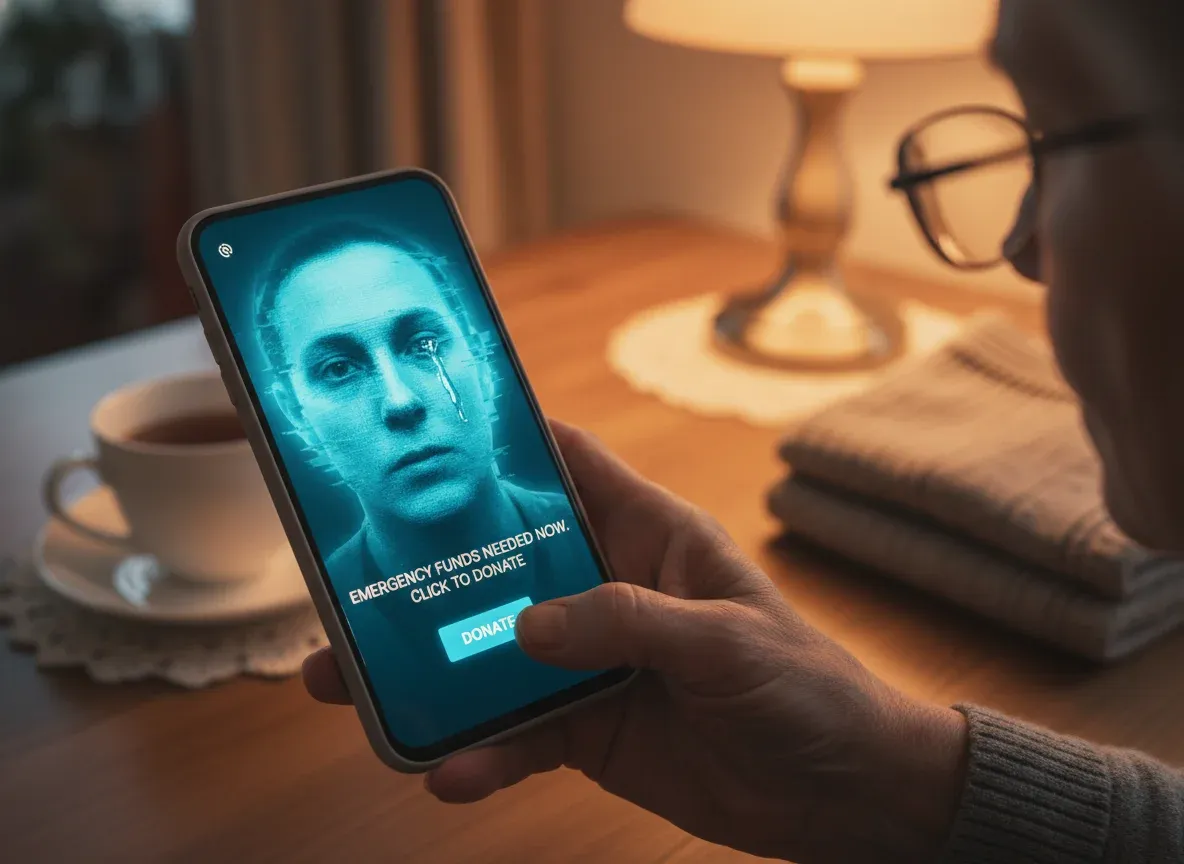
Imagine you are scrolling through your social media feed. You see a shocking photo. It shows a major flood in your town. The streets look like rivers. The sky is a dark, scary gray.
You feel your heart race. But then, you pause. You wonder if this photo is actually real. Could someone have made it with an artificial intelligence tool?
Tech companies say they have a solution for this. They use a tool called watermarking. Think of this as digital invisible ink. It is a hidden stamp placed inside the file.
They tell us this stamp will help us spot fake content. But there is a big problem. This invisible ink is very easy to wash away.
In this guide, we will look at why these hidden stamps do not work. We will also show you what you can do instead to protect yourself from fake online images and text.
What Is an AI Watermark?
To understand why they fail, we first need to know what they are.
When a computer program makes an image, it writes a file. This file contains millions of tiny dots called pixels.
A digital watermark is a secret code hidden inside these pixels. You cannot see it with your eyes. But a special computer program can read it.
There are two main types of watermarks:
- Image Watermarks: These change the colors of a few pixels in a secret pattern.
- Text Watermarks: These use secret patterns of words, punctuation, or spaces in an essay or article.
On paper, this sounds like a great idea. If an AI makes a fake image, the computer stamps it. Then, social media sites can scan for the stamp. They can warn you before you believe a lie.
But in the real world, this system has major cracks.
Why Hidden Watermarks Fail So Easily
Imagine buying a security lock for your front door. Now imagine if a thief could break that lock just by blowing on it. That is how weak most AI watermarks are today.
Scientists have tested these digital stamps. The results are not good.
The Government Tests
The National Institute of Standards and Technology is based in Gaithersburg, Maryland. Experts there study technology safety.
They tested several top watermarking methods. They found that almost all of them could be beaten.
How do people beat them? It does not take a genius computer coder. A regular person can do it in seconds with cheap tools.
Simple Ways to Wash Away the Stamp
If you want to remove a watermark from an AI image, you can use these simple tricks:
- Crop the Image: Cut off the edges of the photo. This often destroys the secret pattern.
- Change the Brightness: Make the photo slightly brighter or darker.
- Rotate It: Turn the image just one degree.
- Save It Again: Convert the photo from a PNG file to a JPEG file. This compresses the image and wipes out the hidden code.
Anyone can do these things using a basic photo editor. You can use Canva Pro for fourteen dollars and ninety nine cents a month. You can also use Adobe Creative Cloud for fifty nine dollars and ninety nine cents a month.
Once you make these tiny changes, the watermark is gone. The image still looks exactly the same to you. But the computer can no longer see the safety stamp. The lock is broken.
The Big Problem with AI Text
If watermarking images is hard, watermarking text is almost impossible.
When an AI writes a paragraph, it chooses words based on math. A text watermark works by forcing the AI to choose certain words over others. This creates a secret pattern.
But think about how easy it is to change a written sentence.
If you want to remove a watermark from AI text, you only need to do one of these things:
- Swap Synonyms: Change the word "large" to "big."
- Fix the Grammar: Run the text through a tool like Grammarly Premium. This service costs twelve dollars a month. It will rewrite the sentences for you.
- Translate It: Translate the text into Spanish, then translate it back to English.
The hidden pattern is instantly ruined. The watermark fails.
What the Experts Say
Researchers at the University of Maryland in College Park have studied this deeply. They tried to break the best watermarks available.
They did not just succeed. They succeeded easily.
They warned that we cannot rely on these systems. If we trust watermarks, we will have a false sense of security. We will think an image is real just because it does not have a warning label. That is a dangerous mistake.
Comparing the Ways to Spot Fakes
Since invisible watermarks do not work well, what else can we use? Here is a simple look at the options:
| Method | How It Works | Can It Be Broken? | Is It Useful Today? |
|---|---|---|---|
| Invisible Watermarks | Secret codes hidden in pixels or words. | Yes, very easily. | No, not reliable. |
| Metadata (Digital Tags) | Extra info saved with the file, like camera type. | Yes, social media sites often strip this info. | Only sometimes. |
| Content Credentials (C2PA) | A secure digital seal from the camera itself. | Hard to break, but requires special cameras. | Yes, this is growing. |
| Lateral Reading | Checking other news sites to verify the story. | No, this relies on human smarts. | Yes, this is the best method. |
What You Can Do Right Now
You do not have to wait for tech companies to fix this problem. You can protect yourself today.
Here are four simple steps you can take to spot online fakes:
1. Look for Visual Clues
AI has come a long way, but it still makes silly mistakes. When you look at a photo, zoom in close.
Check the hands of the people in the photo. Do they have five fingers? Are the fingernails shaped correctly?
Look at the background. Are the straight lines of buildings straight? Or do they bend like water?
Check for text in the background. AI often struggles to write real words on signs. If the street signs look like gibberish, the photo is likely fake.
2. Use Reverse Image Search
If you see a strange photo, do not just share it. Search for it.
You can use Google Images for free. Upload the photo to the search bar.
Google will show you where else that photo has appeared. If it only appears on weird blogs, be careful. If it appears on trusted news sites, it is likely real.
3. Practice Lateral Reading
When you read a shocking claim online, do not stay on that page. Open a new tab in your browser.
Search for the topic on other websites. Are trusted news outlets reporting the same story?
If a giant flood really happened in your town, local news stations would cover it. If no one else is talking about it, the story is probably fake.
4. Slow Down
Fake content is designed to make you feel strong emotions. It wants to make you angry, sad, or scared.
When you feel your emotions rise, take a breath. Do not click share right away.
Ask yourself: "Why did someone make this?" A few seconds of calm thinking can save you from spreading a lie.
Frequently Asked Questions
Can I use a free tool to check for AI watermarks?
Yes, there are free websites that look for these stamps. But remember, these tools are not perfect. A bad actor can easily bypass them. Never trust an image just because a tool says it is clean.
Is anyone working on a better watermark?
Yes, groups like the C2PA are working on secure digital seals. These seals are put on photos when they are taken by a real camera. This is much harder to fake than an invisible watermark.