You are scrolling through your phone, perhaps relaxing after a busy day. Suddenly, a video appears on your screen. It features that famous person, the one everyone is talking about. They are saying something truly unbelievable. Your heart might race a little. You wonder, did they really just say that? It feels shocking, perhaps even offensive. You might feel a strong urge to share it right away with your friends or followers.
But wait a moment. A small voice in your head might ask: Could this actually be fake? In our incredibly fast-paced online world, it is becoming increasingly difficult to tell what is real and what is not. Fake videos, especially those featuring well-known individuals, can spread incredibly fast. They can cause a lot of confusion. They can even make you question what your own eyes are seeing.
This guide is specifically for you. It will help you spot these clever digital tricks. You will also understand why these kinds of fakes are so common today. You are going to learn simple, practical ways to check if that celebrity video is genuine. Is it a real moment, or just a clever AI-made fake created by a computer?
Why AI-Made Fakes Are Everywhere
It used to require a team of experts and very expensive equipment to create a convincing fake video. That is no longer the case. Today, powerful computer programs, often called smart computer programs, can learn how things look and sound. These programs can then create incredibly realistic fake videos. These are the computer-generated fakes you hear about. They are sometimes also known as very realistic fake videos made by computers.
These smart computer programs are constantly improving. They can now generate video and audio that is incredibly difficult to distinguish from real footage. This means that almost anyone with access to these tools can create a convincing fake. Often, they can do it with just a few clicks. The barrier to entry has dropped dramatically. This makes these fakes far more common than ever before.
Why do people create these AI-made fakes? The reasons are varied. They can range from harmless fun to malicious intent:
- For laughs or pranks: Some people create these videos as a joke. However, even innocent pranks can quickly get out of hand. They can cause real distress or damage someone's public image. What starts as a bit of fun can have serious, unintended consequences for the person involved.
- To spread lies: Others have a harmful goal. They want to trick people into believing something false about a celebrity, a company, or even a political figure. Their aim might be to damage someone's reputation. They might also spread harmful rumors or influence public opinion on important issues. This kind of false information, or lies, can have widespread negative effects.
- To make money: Imagine seeing an AI-made fake video of a famous person strongly recommending a suspicious product or a questionable investment scheme. People might be tempted to buy it or invest their savings because they trust the star. This can lead to financial losses for many unsuspecting individuals.
- For scams: Sometimes, these AI-made fakes are part of bigger scams. They might try to get you to click on dangerous links. They might also try to get you to give up your personal information, or even send money directly. A fake video could show a celebrity in distress, asking for help. This is a common tactic to exploit your empathy.
These computer-generated fakes are not just harmless fun. They can seriously hurt a person's life and career. They can cause immense personal and professional damage. They can also confuse the public. This makes it harder for all of us to trust what we see and hear online. When you encounter a video that seems too wild or unbelievable to be true, your very first thought should be to check it carefully. Protecting yourself and others from these digital deceptions is crucial.
What Makes an AI-Made Fake Look So Real?
AI-made fakes are so convincing because the smart computer programs behind them are incredibly good at learning. They study countless hours of real videos, photos, and audio of a person. Think of it like a student studying every single detail of a subject. The program learns how that person's face moves when they talk. It learns how their voice sounds. It learns how they blink, and even their unique expressions and mannerisms.
Once the smart computer program has learned all these tiny details, it can then create entirely new video footage. In this new footage, the person appears to say or do anything the creator wants. It is like a digital puppet master, controlling every aspect of the performance. The AI tries its best to make every tiny detail match. This includes the way light subtly hits the skin. It also includes the almost imperceptible movements of the eyes and lips. This high level of detail is precisely why these fakes can trick your brain so easily. They make you believe what you are seeing is genuine.
Quick Fact: The technology behind AI-made fakes is getting better every single day. What was easy to spot as fake a few years ago is now much, much harder to identify. That is why your careful eye and informed skepticism are so incredibly important!
Your Simple Checklist: How to Spot an AI-Made Celebrity Fake
Do not just share that shocking video immediately. Take a moment to look very closely. Here are some simple clues that can help you tell if a video is an AI-made fake.
Eyes and Blinking
Look carefully at the celebrity's eyes. Do they look completely natural? Real people blink often, but not always in a perfectly predictable pattern. In some AI-made fakes:
- Unnatural Blinking: The person might blink too little, too much, or in a strange, robotic, or jerky way. Sometimes, the blinking might seem out of sync with natural human behavior.
- Fixed Gaze: Their eyes might seem to stare straight ahead. They lack the subtle, natural movements and shifts real eyes make when talking, thinking, or looking around a room. They might also lack the natural sparkle or wetness.
- Odd Eye Color/Shape: Sometimes, the eyes might look slightly off in color, shine, or shape. The whites of the eyes might be too bright or too dull. The edges of the iris might appear unnaturally sharp or blurry, almost like a cartoon character's eyes.
Skin and Lighting
Pay very close attention to the celebrity's skin. Also, observe how light interacts with their face:
- Too Smooth or Too Blurry: The skin might look unnaturally smooth, almost like plastic or a doll. It might lack natural pores and texture. Conversely, it might have blurry patches in areas where details should be clear, especially around the cheeks or forehead.
- Inconsistent Lighting: The light on their face might not match the light in the background. For example, if the background is brightly lit from the left, but the celebrity's face appears lit from the front, that is a significant red flag. Shadows should also fall naturally.
- Strange Shadows: Shadows might appear in odd, illogical places. They might also be completely missing where they should clearly be, such as under the chin or nose. The shadows might also be too sharp or too soft.
- Edges: Look very closely at the edges of the face, especially around the hair, ears, and neck. These areas can sometimes look a bit blurry, pixelated, or have an unnatural sharpness. They can appear almost like they have been cut and pasted onto a different body or background. You might even see a faint, jagged outline or a 'halo' effect.
Mouth and Teeth
The mouth is one of the hardest parts for smart computer programs to get right. This is especially true when someone is speaking naturally:
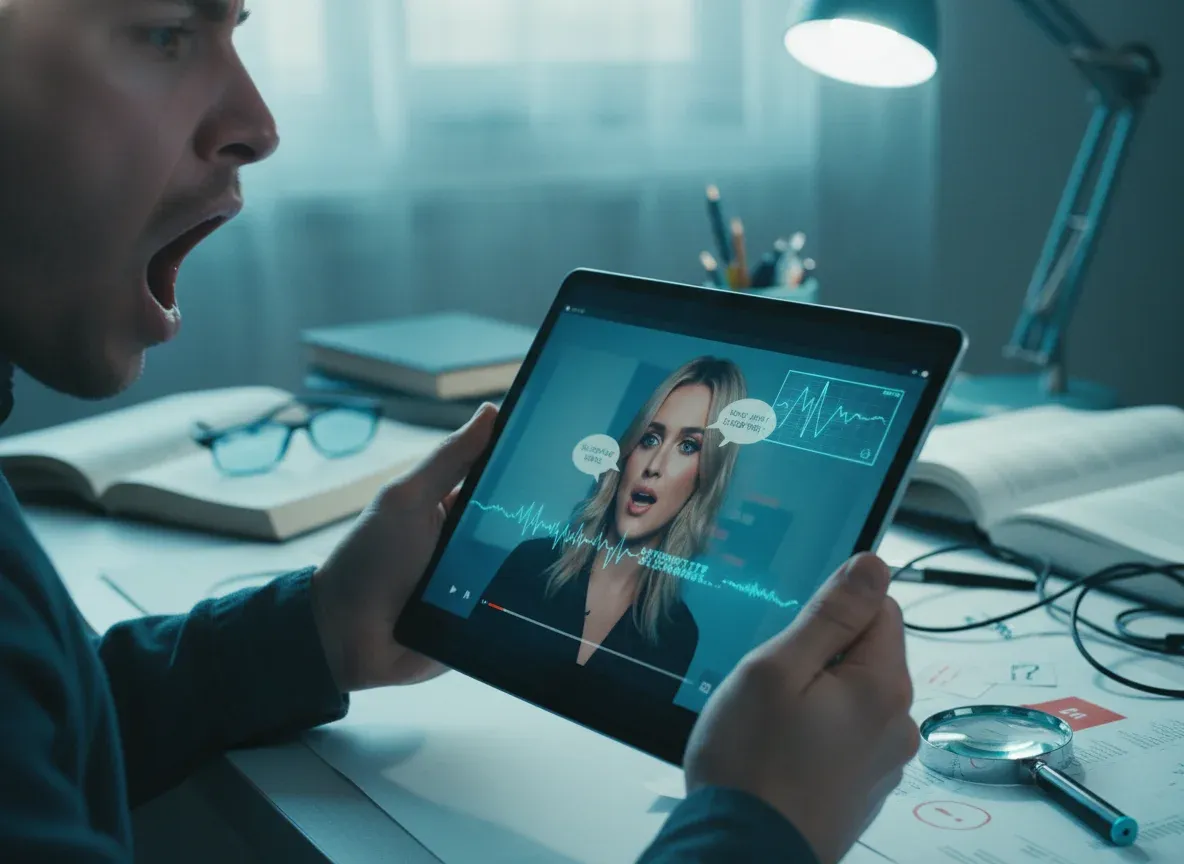
- Doesn't Match Sound: This is often the biggest clue! Does the movement of their lips and mouth perfectly match the words you are hearing? Often, in AI-made fakes, the mouth movements can be slightly out of sync. Or, the shape of the mouth just does not look right for the specific sounds being made. It might look 'rubbery' or stiff.
- Odd Movements: The mouth might move stiffly, jerkily, or in a way that does not look natural for human speech. It might open too wide or not wide enough. Or, the expressions might seem forced and unnatural.
- Teeth: Sometimes, the teeth might look too perfect, too white, or oddly shaped. They might appear to shift unnaturally when the person smiles or talks quickly. Or, they might be missing details like natural imperfections or reflections.
Voice and Sound
The audio in an AI-made fake can often give it away. This is true even if the video looks convincing:
- Robotic or Choppy: The voice might sound flat, robotic, or have strange, unnatural pauses and cuts. It might lack the natural flow and rhythm of human speech.
- Unnatural Pitch/Tone: The celebrity's voice might sound a bit higher or lower than usual. Or, the overall tone might feel off, perhaps slightly metallic or muffled. It might not have the emotional range you expect from the person.
- Background Noise: Listen carefully for weird changes in background noise. Or, listen for a complete lack of it when there should clearly be some. Sometimes, the sound might seem like it was recorded in a completely different space than the video shows. This creates an obvious mismatch. For example, you might hear birds chirping in what looks like an indoor studio.
- Doesn't Match Emotions: Does the voice sound angry or distressed while the face looks calm or even smiling? This kind of mismatch between the audio and visual emotions is a very big warning sign that something is wrong.
Background and Objects
It is not just the person in the video. The setting around them can also offer important clues about whether it is real or fake:
- Blurry or Distorted Background: The background might look oddly blurry, warped, or have strange, repeating patterns that seem out of place. It might appear as if it was poorly edited or stretched.
- Inconsistent Objects: Look for objects in the background that seem to appear, disappear, or change subtly without explanation. For instance, a coffee cup on a table might move without anyone touching it. Or, a picture on the wall might change its orientation or even its image.
- Strange Reflections: If there is a mirror, a window, or any other shiny surface in the video, check if the reflection of the celebrity looks normal. Sometimes, the reflection might be missing entirely. Or, it could be distorted or show something different from what is actually happening.
Context and Source
Beyond what you see and hear in the video itself, it is crucial to think about where you saw it. Also, consider what it is actually about:
- Is it Too Wild to Be True? If the claim or statement made in the video is incredibly shocking, unbelievable, or completely out of character for the celebrity, you should be extra suspicious. Your gut feeling that 'this can't be real' is often a good starting point.
- Who Shared It First? Did the video come from a trusted news organization, a reputable media outlet, or the celebrity's own official social media accounts? Or was it shared by a random, unknown account with few followers, or a history of sharing questionable content? The source matters greatly.
- Check Other Sources: Do other reliable news outlets or well-known celebrity fan pages report the exact same event or statement? If not, and if only one obscure source is reporting it, then it is very likely an AI-made fake. Cross-reference the information widely.
- Date: When was the video supposedly made or published? Does the timing line up with recent events or the celebrity's known schedule and public appearances? An old video presented as new, or a video from a time the celebrity was known to be elsewhere, is a red flag.
A Quick Look: Real vs. Fake Clues
Here is a simple table to help you quickly compare what to look for when you are trying to decide if a video is real or an AI-made fake:
| What to Look For | Signs It Might Be Real | Signs It Might Be Fake |
|---|---|---|
| Eyes | Natural blinking, fluid eye movement, natural shine and wetness | Fixed gaze, unnatural blinking (too fast, too slow, or robotic), weird shine or dullness, unnatural eye color/shape |
| Skin | Natural texture, visible pores, consistent shadows and highlights | Too smooth (plastic-like), blurry spots, odd lighting that doesn't match the background, strange or jagged edges around the face/hair |
| Voice | Clear, natural tone, matches speaker's personality and emotions | Robotic, choppy, weird accent, unnatural pitch/tone (metallic, muffled), doesn't match lip movements or facial expressions |
| Mouth | Smooth, natural movements, perfectly syncs with words, natural teeth | Stiff, jerky, out of sync with audio, 'rubbery' look, odd or too-perfect teeth that shift unnaturally |
| Context | From a trusted news outlet, multiple reputable sources confirm, believable content | Shared by unknown accounts, content is too shocking or unbelievable to be true, no other reliable reports |
| Movement | Fluid, natural body language, realistic head turns and gestures | Stiff, jerky, or unnaturally smooth movements, odd head turns that seem disconnected from the body, unrealistic gestures |
A Real-World Example: The "Fake Charity Endorsement"
Imagine you see a video of a famous actor, known for their kindness and charitable work. They are suddenly promoting a very suspicious-looking charity. This charity promises huge returns on small donations. This already sounds far too good to be true. The video quickly goes viral across social media platforms.
Your friend, Sarah, sees it and is about to donate her hard-earned money. But you remember these important tips. You decide to look very closely at the actor's face in the video. Their skin looks a little too smooth, almost airbrushed. It lacks the natural imperfections you would expect. The lighting on their face also seems a bit off compared to the background, as if it was added later. When they speak, their mouth movements seem slightly delayed from the audio. Their voice, while similar to the actor's, has an odd, flat, almost metallic quality to it. This is unlike their usual energetic and warm tone.
Then you check the source of the video. It was shared by a brand new, unverified account with very few followers. It was not shared by the actor's official page or a major news outlet. A quick search for the charity reveals no real presence, no reputable reviews, and a website that looks hastily put together. You also notice that the actor was known to be filming a movie on a different continent at the time this video was supposedly made.
Thanks to your careful detective work, you immediately tell Sarah to hold off on donating. You have likely saved her, and potentially many others, from falling for a financial scam. All of this happened because you took a moment to question what you saw and applied your checking skills.
Why Trusting Your Gut Isn't Enough Anymore
Our brains are truly amazing, but they also rely on mental shortcuts to process information quickly. These quick ways our brains process things help us make fast decisions in everyday life. However, when you see something shocking or emotionally charged, your brain might jump to conclusions. It might do this without fully checking all the facts. This is especially true with videos that look very real and play on your emotions.
AI-made fakes are specifically designed to bypass these mental shortcuts. They are crafted to trigger your emotions. They make you react quickly, often with anger, fear, or excitement. Because these fakes are getting so incredibly good, it is becoming harder and harder to rely solely on your gut feeling or initial impression. You need to actively look for the specific clues we discussed. What your eyes think they see might not be the whole truth. Your brain can be easily fooled if you are not consciously looking for inconsistencies.
What You Can Do Right Now
Being aware and proactive is your absolute best defense against online deception. Here are simple, actionable steps you can take today to protect yourself and others:
- Pause and Question: Before you share any shocking video, especially one featuring a celebrity, take a deep breath and a moment to think. Ask yourself: Is this really possible? Does it truly make sense given what I know about this person or situation? A moment of skepticism can save you from spreading false information.
- Look for the Clues: Use the detailed checklist provided above. Pay very close attention to the eyes, skin, mouth, and voice of the person in the video. Even small, subtle oddities or inconsistencies can be significant clues that the video is not real. Train your eye to spot these imperfections.
- Check Trusted Sources: Always verify any surprising or important information with reliable news organizations, reputable media outlets, or the celebrity's official social media channels. If only one obscure or unverified source is reporting it, you should be very suspicious. Real news is usually reported by many credible sources.
- Use Fact-Checking Tools: Many websites and apps are now emerging that can help analyze videos for signs of tampering or manipulation. Truth Lenses offers dedicated tools to help you identify manipulated media. This gives you an extra layer of verification. Learn more about how these tools work and how they can assist you by visiting
/how-it-works. - Report Suspicious Content: If you find a video you strongly believe is an AI-made fake, do your part to protect the online community. Report it immediately to the platform where you found it. This action helps content moderators remove harmful content. It also prevents others from being tricked.
Frequently Asked Questions
Can smart computer programs really make a perfect fake video?
Smart computer program technology is advancing incredibly fast, making fakes more realistic every day. While it is getting harder to spot them, most still have tiny flaws if you know exactly what to look for and examine them closely. A truly "perfect" fake that fools absolutely everyone, all the time, is still very rare. However, these fakes are often good enough to fool most people who are not looking closely or are caught up in the emotion of the moment. That is precisely why being informed and vigilant is so incredibly important for you.
What if I cannot tell if a video is fake?
If you have looked closely, applied all the tips, and still cannot definitively tell if a video is real or fake, the safest and most responsible thing to do is to assume it might be fake until it is proven otherwise. Do not share it. You can also try searching for news about the video from reputable sources or using a dedicated tool, like the ones found on Truth Lenses, to help analyze it. Remember this simple rule: When in doubt, do not spread it out! Your caution helps prevent the spread of false information, or lies.
What is the harm in sharing an AI-made fake, even if it is just for fun?
Even if you share an AI-made fake video as a joke or because you find it entertaining, it contributes directly to the spread of false information. Once a fake video is out there, it is incredibly difficult to stop its spread and remove it from the internet. It can severely damage reputations. It can also spread harmful lies. This makes it harder for everyone to trust what they see and hear online. Your share, even a small one, adds to the confusion and erodes public trust. It also normalizes the creation and sharing of such fakes. This makes the problem worse for everyone in the long run.
Staying informed and using the right tools can help you protect yourself and others from online deception. Explore how Truth Lenses can help you analyze images and videos by visiting /video and /image to make sure what you are seeing is truly real and trustworthy.