The Digital Shield: AI-Blocking Tricks and How Creators Fight Back
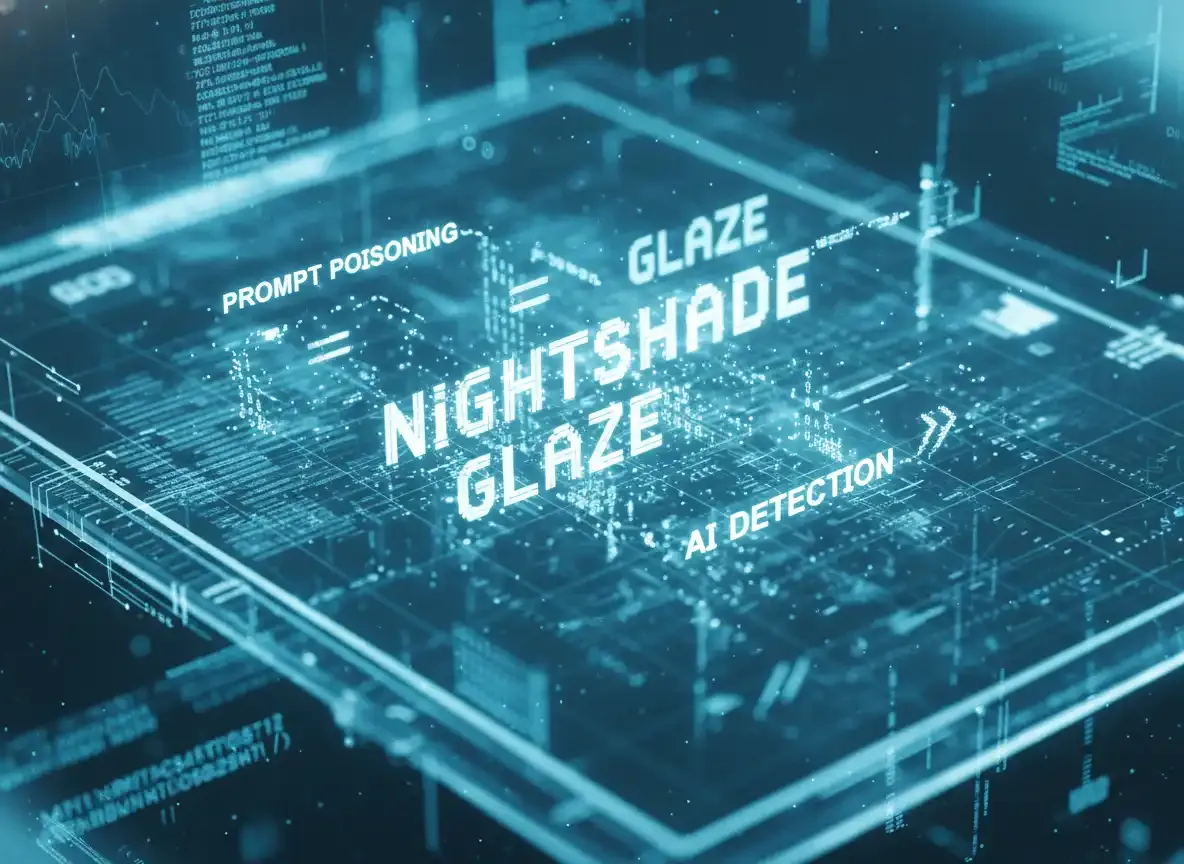
What is an AI-Blocking Trick? Imagine a clever digital shield for your art. This is what we call an 'AI-blocking trick,' or 'prompt poisoning.' It involves adding hidden digital changes to your pictures or art. These changes are designed to mess with how AI tools that create things learn from your work. It's different from simply locking up your data so no one can see it. Instead, this trick uses the small differences between how your eyes see things and how an AI picks out details. At Truth Lenses, we call this the 'digital shield.' It's a smart way for creators to protect their original work. They do this by adding 'noise' or invisible tweaks that confuse the AI's brain.
The digital world is changing fast. It's becoming harder to know what's real and what's not. For a long time, experts who investigate digital evidence focused on finding harmful AI fakes. These were AI-made fakes designed to trick people. But now, a new kind of fight has started. We call it the 'artist fighting back with AI tricks.' Huge collections of images AI uses, like those from LAION, keep gathering pictures from the internet. They do this without asking artists and creators for permission. So, artists and companies are now using tools like Nightshade and Glaze to defend themselves. This creates a tricky situation for investigators. The very tools meant to protect human creativity are sometimes being mistaken for AI-made changes by regular AI detection systems.
How These AI-Fighting Tools Work: Glaze and Nightshade
To understand this tricky investigation challenge, you first need to know how these tools are built. They are much more than simple filters. They are clever, aggressive AI-fighting tricks. They aim right at the inner workings of image-making AI, specifically the systems that create pictures.
Style Disguise with Glaze
Glaze was created by smart people at the University of Chicago. It uses a process like 'copying a style,' but in reverse. When you, as an artist, put Glaze on your digital painting, the software looks for tiny details. It finds things like how thick your brushstrokes are, how colors blend, and where edges are. These are the specific features an AI would use to figure out your artistic style. Then, Glaze adds a 'style disguise.' To your eyes, the picture still looks like your original charcoal sketch. But to the AI's detail-finding system, the hidden pixel data tells it something else. It might suggest the image is an oil painting, perhaps in the style of Van Gogh. This creates a confusion in the AI's hidden understanding. It stops the AI from accurately copying your unique artistic style when it tries to create new art later.
AI Data Trickery with Nightshade
Nightshade is much more aggressive than Glaze. Glaze plays defense by hiding your style. Nightshade is an aggressive AI-fighting tool. It's made to 'poison' the actual data that AI learns from. It focuses on the AI's way of linking words to pictures, called CLIP encoders. Imagine putting trick samples into a collection of images. For instance, you might have a picture of a dog. Nightshade changes it so that, mathematically, an AI sees it as a cat. This trickery messes up the AI's understanding of the meaning of things. If an AI learns from enough of these Nightshaded images, its idea of 'dog' starts to break down. Eventually, when you ask the AI to create a dog, it will make something distorted or nonsensical. This happens through a clever math trick AI uses. The hidden changes are carefully adjusted to cause the biggest possible error during the AI's learning process.
Digital Investigation: Finding the Hidden Clues
For us, your digital investigators at Truth Lenses, finding these AI-blocking tricks means looking deeper than just what you can see. These tools are made to be almost invisible to your eyes. But they leave unique digital fingerprints. We can spot these fingerprints using special investigation methods.
Compression Error Check (ELA)
One of our main tools for digital investigation is called Compression Error Check, or ELA. ELA helps us see how much an image has been compressed. When an image has been 'poisoned' with an AI-blocking trick, the hidden digital changes often show up. They look like tiny, rapid changes that are different from the usual marks left by saving images, like JPEGs. In an image protected by Nightshade, ELA often reveals a 'checkerboard' pattern. Imagine a chessboard, but instead of black and white squares, you see tiny, intense bright spots mixed with darker areas. These spots don't match the actual edges of what's in the picture. This is a clear sign that the pixels have been changed in an unusual way.
Pixel Color Difference Check
We also look at something called a Pixel Color Difference Check. By studying the way colors are spread out in a suspicious image, we can find odd patterns. AI-fighting tools often change pixel values. They do this in a way that you barely notice, but it causes big changes in the underlying numbers. If you magnify the image by 400%, these changes might look like a faint, colorful halo or a subtle blur. It's similar to what you see when light passes through a prism. Normal photos have a predictable background fuzz. But poisoned images show a planned, organized fuzziness. This is a clear sign of clever AI-fighting adjustments.
Similarity Score and AI's Understanding Gap
We also check the meaning of things. We use an AI-based analysis to measure the 'similarity score' between a picture and its hidden information. In a real photograph, what you see and the descriptive tags should match up very well numerically. But in a poisoned image, we see a big 'meaning gap.' The picture might clearly show a 'mountain landscape.' However, the AI's numerical description of that image is pulled towards a totally different idea. It might be something like 'rubber duck' or 'garden gnome.' This mismatch is the clear proof that an AI-blocking trick has been used.
The 'Partially AI-Altered' Problem: Confusion Over What's Real
This brings us to the heart of the tricky situation for investigators: what we call the 'Partially AI-Altered' problem. In our lab, this term describes pictures that are 90% created by a human. But they also have a 10% layer of AI-designed hidden changes. Regular AI fake detectors are either/or. They just look for any signs that AI created something. Since AI-blocking tools use AI-designed hidden changes, they often set off a wrong alarm. This puts creators at a big risk. Imagine you're a journalist. You submit a protected photo to a news agency. Your work might get flagged as 'changed' or 'fake.' Without a detailed investigation report, it's hard to tell the difference. We need to distinguish between harmful AI fakes, which are meant to trick people, and protective AI alterations, which are meant to keep your work safe. If we don't, your reputation as a creator is on the line. Truth Lenses is leading the way in creating 'AI-Fighting Tool Recognition.' This is a special detection system. It recognizes the specific digital fingerprints of Glaze and Nightshade. This helps prevent these unfair classifications.
Company Protection and Legal Challenges
This also has huge importance for company protection. Companies are more and more worried about 'style copying.' This is when rival companies use AI to create marketing materials. These materials look exactly like a fancy brand's artistic style. By putting AI-blocking tricks on their official press releases and catalog images, brands can effectively 'kill' any AI that tries to learn from their data. Think of it as a digital trap. But this also creates complex legal challenges. In a case about stealing creative work, you often have to prove that your original work is authentic. If a company's own 'protected' images fail tests to prove something is real because of these AI-blocking tricks, it makes the record of who handled the evidence tricky. Legal teams now need to make sure their digital files come with a digital ID stamp. This is from the C2PA, the Coalition for Content Provenance and Authenticity. This stamp gives a secure, verifiable history of the image. It includes details about when protective tools were used.
How Truth Lenses is Improving AI Investigations
Our methods are changing to keep up with this mix of real and AI-altered content. We don't just give you a single 'AI Fake' score anymore. Instead, our investigation reports give you a detailed analysis from many angles:
- Finding AI-Made Clues: We look for specific signs of AI creation, like certain patterns in how images are scaled up or the unique fuzziness AI tools add.
- Spotting AI-Blocking Tool Marks: We compare the hidden pixel changes to the known patterns of AI-blocking tools like Glaze, Nightshade, and Mist.
- Meaning Check: We measure how well the visual content matches the AI's internal descriptions of what it sees.
- Origin Check: We check digital ID stamps to confirm who created the image. We also confirm why any changes were made.
By putting all these layers together, we can give you a clear answer. Is this image a misleading fake? Is it an original with AI protection? Or is it a partially AI-altered image? To learn more about how our technology works, please visit our How It Works page.
Frequently Asked Questions
Does using an AI-blocking trick change how my art looks?
To your eyes, the changes are almost impossible to see. You might notice a tiny bit more 'grain' or a subtle change in texture. It's like the slight fuzziness you get from old film cameras. But these small changes are very important to AI tools.
Can AI companies undo Nightshade's effects?
Experts are trying to find ways to 'un-poison' images. But it's like a never-ending game of cat and mouse using math. Right now, filters that try to remove the changes often also get rid of the image's fine details. This makes the cleaned-up data less useful for training AI to create high-quality images.
Is it okay legally to put these AI-blocking tricks on my own images?
Yes, it is. If you own the copyright, you have the right to change your own files. Using an AI-blocking trick is a type of digital protection. It's also a way to defend yourself against others gathering your data without permission. It's not 'hacking' because you're not getting into someone else's system without permission.
Will your tools say my Glazed image is an AI fake?
No, our image detection tools are specially trained to know the difference. A regular detector might give you a wrong alarm. But Truth Lenses gives you a detailed explanation. It clearly identifies when you've used protective AI-fighting tools.
Does this work for videos too?
Tricking AI in videos is harder. This is because videos need to look smooth over time. But researchers are making progress. For now, we suggest using our video analysis tools. They can help you spot traditional AI fake changes, picture by picture.
Conclusion: Navigating the Hybrid Future
We are heading into a future where 'authentic' isn't just a simple yes or no answer. In this new time, creators sometimes have to use AI tricks on their own work. They do this to keep their human touch safe. Because of this, the job of a digital investigator is more important than ever. A 'partially AI-altered' image isn't a lie. It's a shield. At Truth Lenses, we promise to give you the clear information you need. We help you tell the difference between a protective shield and a misleading weapon. Maybe you're an artist protecting your style. Maybe you're a journalist checking a source. Or maybe you're a company protecting your brand. No matter what, we give you the true facts in a world that increasingly uses AI-created content. Check out our full range of tools so you can stay informed and prepared.
What You Can Do Right Now
- Protect Your Work: If you're a creator, consider using tools like Glaze or Nightshade on your original art. This can help prevent AI from learning your unique style without your permission. Look for guides on how to apply these digital shields effectively.
- Stay Informed: Keep up-to-date on the latest news about AI and digital authenticity. Understand how AI is used and how it can be misused. Knowledge is your best defense.
- Question What You See: Don't automatically believe every image or video you encounter online. Take a moment to think critically. If something looks too perfect, or too strange, it might be an AI-made fake.
- Use Verification Tools: If you're unsure about an image's origin, use reliable verification tools. Services like Truth Lenses can help you analyze content. We can tell you if it's been altered, protected, or is a genuine original.
- Support Provenance Standards: Advocate for wider adoption of digital ID stamps like C2PA. These standards help track the history of digital content. They provide transparency about who created it and what changes were made.