Imagine waking up to find your entire life savings gone. This didn't happen because you clicked a bad link. It happened because a smart computer program called your bank, spoke in your exact voice, and convinced the automated system to transfer every penny. This terrifying future is the reality of 2026.
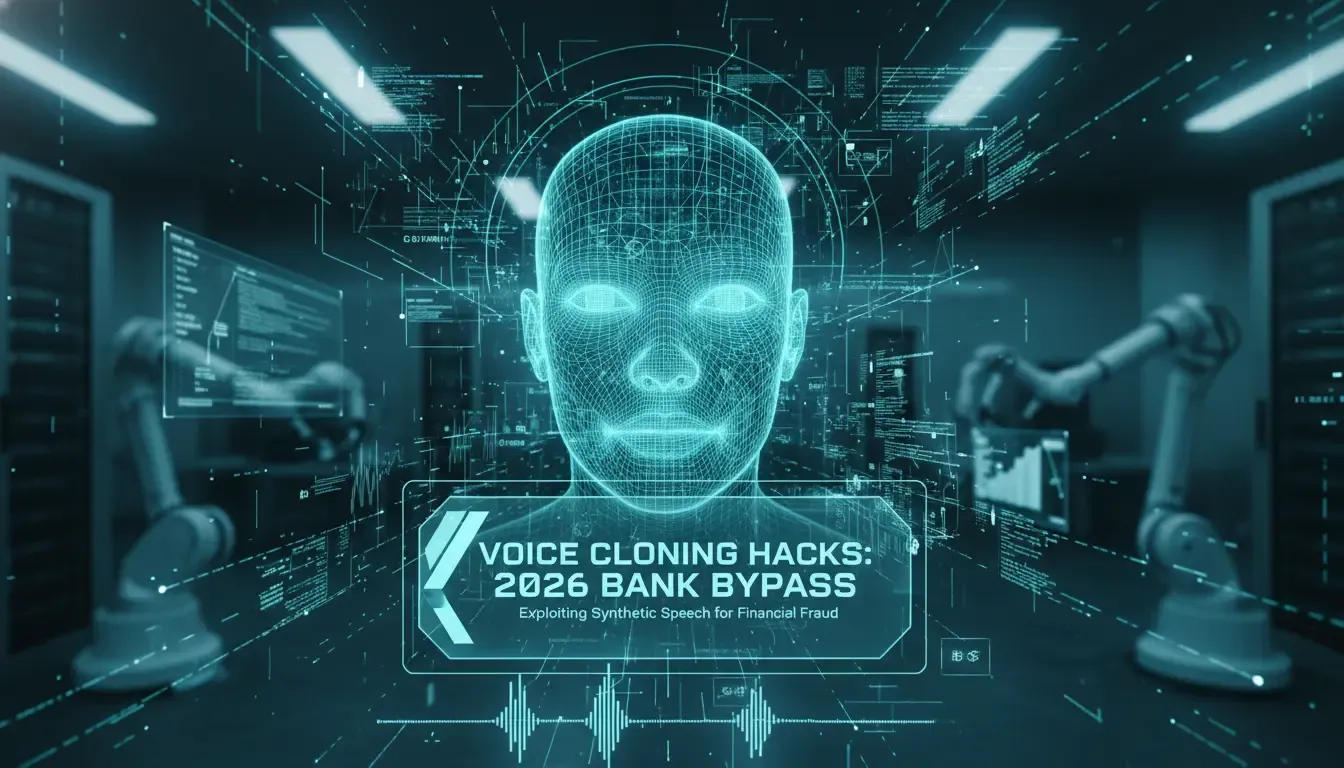
Scammers are no longer using clumsy fake emails or poorly written text messages. Instead, they are using smart computer programs, known as AI scamming groups. These programs copy your voice perfectly. They then trick bank voice recognition systems. This isn't science fiction. It is the cutting edge of financial crime, and it is happening right now.
As our banks rely more on security that uses your unique physical traits, like your voice or face, criminals have found new ways to attack. They are turning the very things that make you unique into weapons. The days of trusting a voice on the phone are officially over. You need to be aware of this new threat.
How Voice Copying Technology Got So Good
To understand how we got to this dangerous point, we need to look at how computer-generated sound has changed. Just a few years ago, making a believable copy of a voice took many hours of clear, studio-quality sound. The results often sounded robotic. They lacked the natural emotions, breathing patterns, and rhythm of human speech. You could usually tell it was fake.
Today, everything has changed. Modern advanced AI programs only need three to five seconds of recorded sound. From this tiny snippet, they can create an almost perfect digital copy of your voice. This huge leap in technology comes from big improvements in AI learning from data. It also comes from the spread of AI programs anyone can use.
Scammers no longer need special labs or millions of dollars worth of computing power. A regular gaming laptop with the right software can now create a voice. This voice is so real that your ear can't tell it from the real thing. What's more, these AI programs have learned to copy tiny details in how someone speaks. They can make it sound like someone is breathing heavily, stuttering slightly, or speaking with a specific regional accent. This makes the fake voice even more convincing to you and to automated systems.
"AI becoming easier for everyone to use has given amazing tools to creators. But it has also given a loaded weapon to cybercriminals. Voice copying is the ultimate master key for older voice recognition systems."
For journalists, legal teams, and HR professionals, this creates a huge problem. When a voice can be perfectly copied from a single public speech or a short social media post, the idea of checking someone's identity is broken. We are entering a time when seeing, or in this case, hearing, is no longer believing. You can't trust what you hear anymore.
What Are AI Scamming Groups?
"Vishing," or voice phishing, is not a new idea. For decades, scammers have used tricking people over the phone. They would try to get individuals to reveal private information. However, traditional vishing was limited by human abilities. A scammer could only make one call at a time. Their success depended heavily on their personal skill at tricking the victim. Now, enter the AI scamming group.
An AI scamming group is a network of smart computer programs. These programs work together to make thousands of phone calls at the same time. These programs are powered by advanced AI that understands and generates text. They are directly connected to programs that create voices instantly. When the AI makes a call, it listens to the person or automated system on the other end. It then turns the sound into text. Next, it creates a convincing reply. Finally, it turns that reply back into the copied voice. All of this happens in milliseconds.
What makes these scamming groups truly terrifying is their ability to change and adapt. If a bank's customer service person asks an unexpected security question, the AI program can instantly search your compromised online activity and information to find the answer. If the representative sounds suspicious, the AI can change its tone. It can sound more confident, panicked, or confused. It adjusts based on what kind of psychological trickery is needed. It is a tireless, endlessly scalable army of digital imposters, ready to trick you at any moment.
The Step-by-Step Way Scammers Trick Banks
How exactly does an AI scamming group get into a highly secure bank? The process is a carefully planned series of events. It takes advantage of both technology weaknesses and human psychology. Here is how a scamming group bypasses bank security in 2026.
Step 1: Collecting Your Voice
The attack starts with gathering information. Scammers use automated programs to search the internet for any trace of your voice. This could be a professional presentation you gave on LinkedIn. It might be a casual video on TikTok. Perhaps it's a podcast interview, or even your personalized voicemail greeting. Because modern AI needs so little information, almost anyone with an online presence is at risk. The collected audio is then cleaned and processed to isolate your voice.
Step 2: Creating the Digital Voice
Once your voice is collected, it is fed into an AI that creates voices. This system looks at the unique qualities of sound in your voice. It analyzes how high or low your voice is, its unique tone, and how it sounds in your throat. It also looks at the shape of your nose. The AI then builds a complete digital copy of your voice. This effectively creates a digital instrument that can "play" any text it is given, using your exact voice. It's like having a perfect musical instrument that only plays your voice.
Step 3: The Automated Attack
With your voice copy ready, the scammer tells the AI scamming group what to do. Their goal is to trick the bank's automated phone systems and start a money transfer. The group dials the bank's customer service numbers. They often make the caller ID look like your registered phone number. Because the group can handle thousands of calls at once, it can target many banks at the same time. This greatly increases the chances of a successful theft.
Step 4: Beating Voice Recognition Systems
Many big banks previously used voice recognition technology. They advertised it with slogans like "My voice is my password." When the AI program encounters this system, it simply speaks the required phrase using your copied voice. Because the copy perfectly matches the specific sound patterns of your voice, the older voice recognition system thinks it's you. The AI is then given access to your account. This bypasses the need for PINs or passwords. Your own voice has become the key for the scammer.
Why Old Voice Recognition Systems Fail
For years, banks relied on voice recognition systems. They saw them as an easy and very secure way to check who you are. The idea seemed good: just like a fingerprint, every human voice has unique features. These features are almost impossible for another human to perfectly copy. However, these systems were designed to spot human imposters, not advanced AI programs.
Traditional voice recognition systems mainly rely on analyzing sound patterns. They measure the frequency and strength of the audio signal. When an AI creates a voice copy, it mathematically copies these exact sound patterns. To an older voice recognition system, the AI copy and the real human voice look identical on a visual representation of sound. These systems lack strong "checking if the voice is coming from a real person right now." They can't tell if the sound is being made by a real human voice box in real-time or if it's being generated by a computer chip.
Furthermore, the race between faking voices and detecting them has heavily favored the attackers. As banks slowly update their systems to look for tiny inconsistencies in sound left by AI, scammers quickly update their programs. They smooth out those very flaws. It is a game of cat and mouse where people's livelihoods are at stake. Right now, the mice, or rather, the AI scammers, are winning. This means your money is at risk.
Real-World Dangers for Businesses and You
The effects of these AI scamming groups go far beyond individual bank accounts. For businesses, especially HR professionals and legal teams, the dangers are huge. Imagine an HR department getting a frantic phone call from the CEO. The CEO demands an immediate transfer of funds to secure a secret company purchase. The voice is perfect. The caller ID matches. The tone is urgent. In reality, it is an AI program carrying out a highly targeted scam. This could cost the company millions.
- Company Secrets Stolen: Competitors or government-backed groups can use voice copies to pretend to be executives. They might trick employees into revealing trade secrets or sensitive legal plans. Your company's most valuable information could be compromised.
- Legal Problems: If a bank transfers money based on a faked voice, who is responsible? The legal rules around fraud using fake identities are still unclear. This leaves victims stuck in confusing and frustrating official processes. You might spend months trying to prove you didn't authorize a transfer.
- Damage to Reputation: For public figures and journalists, a copied voice can be used to make up controversial statements. This can destroy careers and make people lose trust in the news. Your good name could be ruined in an instant.
The emotional cost for victims is just as severe. It is a deep violation to have your very identity stolen and used against you. Victims often find it incredibly hard to prove to their banks that they did not approve the transactions. This is because the bank's records show that the victim's "voice" passed all the security checks. You might feel helpless and betrayed.
What You Can Do Right Now
While the threat is scary, you are not powerless. Protecting yourself from AI scamming groups requires you to be proactive about your digital habits. You also need a basic change in how you prove who you are. Here are the crucial steps you must take to secure your identity in 2026. Imagine a scammer trying to use your voice right now. These steps will stop them.
1. Clean Up Your Public Audio
It's almost impossible to remove every trace of your voice from the internet. However, you can limit how much is out there. Check your social media profiles. Remove any videos or voice notes that are not necessary. If you are a professional who often speaks publicly, know that your voice is a valuable target. Consider using tools that put hidden codes into your public audio. This makes it hard for AI programs to learn from your voice. Think of it like putting a secret signature on your voice.
2. Turn Off Voice Authentication
Contact your banks, phone companies, and any other services that use voice recognition. Clearly ask them to turn off voice authentication on your accounts. Instead, choose to use multiple ways to prove who you are. Physical security devices, phone apps that create security codes, and alerts on your phone that confirm logins are much harder for an AI scamming group to bypass than a voice print. This is your strongest defense.
3. Set Up Secret Safe Words
For personal protection, create a "safe word" or a unique secret question-and-answer with your family members, close co-workers, and financial advisors. If you get a suspicious call from a loved one asking for money, or if an employee gets an urgent request from an executive, asking for the safe word immediately breaks the AI's trick. AI programs cannot guess a pre-arranged secret. This simple step can save you from a huge scam.
How Truth Lenses Helps Find AI-Made Fakes
At Truth Lenses, we understand that old security methods are no longer enough. As the top platform for finding AI and AI-made fakes, we are building the next generation of defense against AI-made fakes. Our technology goes beyond simple analysis of sound patterns. We use smart computer programs that learn. They detect the tiny inconsistencies in sound and subtle timing errors that are always left behind by AI that creates voices.
When audio goes through our detection engine, we analyze it at a super-fast, sub-millisecond level. We look for unnatural breathing patterns, digital shakiness, and the lack of real voice box resonance. By using our system, banks, legal teams, and company HR departments can instantly check if any audio stream is live and real. This stops scamming groups before they can carry out their attacks. We help you know what's real and what's fake.
We believe that openness and advanced detection are the only ways to bring back trust in our digital talks. Whether you are checking a suspicious voicemail or verifying a live caller, our tools give you the clear answer to the question: "Is this real?" You deserve to know the truth.
Frequently Asked Questions
What exactly is vishing?
Vishing stands for "voice phishing." It is a type of tricking people where scammers use phone calls. They try to trick victims into giving away private information, transferring money, or allowing access to secure systems. AI vishing uses copied voices to make these attacks seem almost perfectly real to you.
Can AI really bypass my bank's security?
Yes, it can. If your bank relies on older voice recognition systems, like those that say "My voice is my password," a high-quality AI voice copy can easily trick the system into letting it in. This is why we strongly recommend that you turn off voice-based logins for all your bank accounts. Your money is too important to risk.
How much audio is needed to copy a voice?
In 2026, the best AI programs need as little as three to five seconds of clear audio to create a convincing copy of your voice. This small amount of audio can easily be found from your social media posts, voicemails, or public presentations. Be careful what you share online.
Is voice authentication safe anymore?
No, not as a single security step. As a standalone security measure, voice authentication is fundamentally broken. It should only be used as a very small part of a larger security plan that uses multiple ways to prove who you are. This plan should include physical security devices or secure phone apps that create security codes. Relying only on your voice is no longer safe.
How can I tell if I am talking to an AI copy?
While very good copies are impossible for the human ear to tell apart, you can test the caller. Ask them very specific, unexpected questions. Or, demand that they use a pre-arranged safe word. AI programs often struggle with sudden changes in conversation or information that isn't available in your public online activity. Trust your gut if something feels off.
Secure Your Reality with Truth Lenses
The rise of AI scamming groups marks a dangerous new chapter in online security. But you do not have to face it alone. Whether you are a journalist checking a suspicious audio recording, an HR professional protecting company assets, or an individual securing your life savings, Truth Lenses is your expert friend in the fight against AI-made fakes. We are here to help you.
Don't wait until your voice is used against you. Head over to our home page to learn more about our mission. Explore our blog for the latest research on AI-made fake threats. Or, dive deep into how it works to understand the science behind our detection engine. If you need to check a specific file right now, try our audio and video analysis tools or our image detection suite. The truth is out there, and we can help you see it clearly.