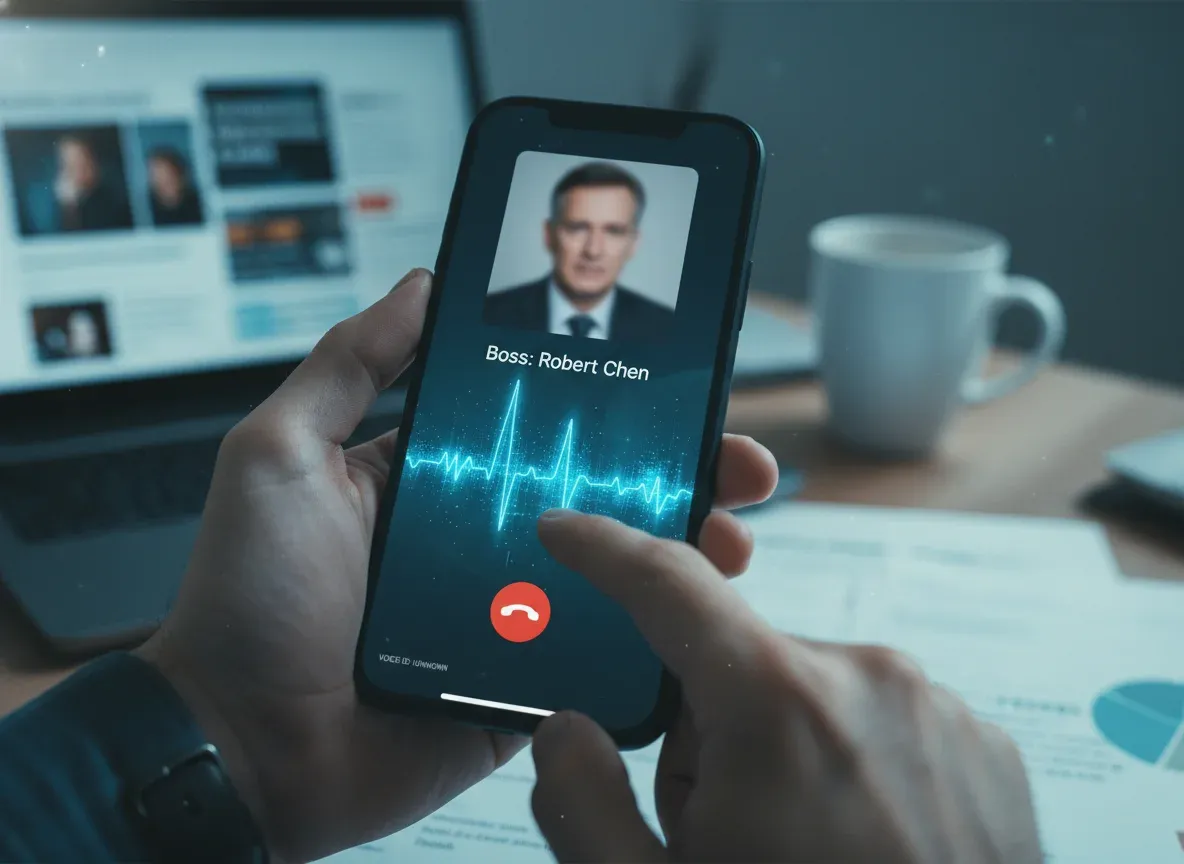
You are busy at work, focusing on your tasks. Suddenly, your phone rings. It is your boss. Their voice sounds a little stressed, and they have an urgent request. "I need you to quickly send that payment to this new account," they say. "Do not tell anyone, it is confidential." Your gut might tell you something is off, but it sounds just like them. What do you do in that moment?
This is not a scene from a science fiction movie. This is a real threat, happening right now to everyday people like you. Bad actors, which are essentially scammers, are using clever AI technology to copy people's voices. They then use these AI-made fake voices to trick you, your co-workers, or even your family into doing things you should not. This could mean sending money or giving away private information.
What Are AI-Made Fake Voices?
AI-made fake voices, sometimes called copying voices with AI or AI-made fake audio, are recordings created by computers that sound exactly like a real person. Think of it like a very advanced mimic. Instead of a person practicing for hours to sound like someone else, a special computer software listens to many recordings of a person's voice. It learns everything about that voice, including their accent, their speaking speed, their unique tone, and even how they say certain words. It is like a master musician learning every nuance of another artist's playing style.
Once the AI technology has "learned" the voice, it can then make the person say anything. It can generate new sentences, new words, or even full conversations that the real person never actually spoke. The scary part is how good these fakes have become. For many people, it is almost impossible to tell the difference between a real voice and an AI-made fake voice. Your ears might not be able to catch the subtle differences.
Quick Fact: Just a few seconds of a real person's voice can be enough for AI technology to start copying it. This is why being careful about what you share online, especially voice recordings, is very important for your safety.
How These Fake Calls Work
The process behind these tricky calls is simpler than you might think. It involves a few key steps that bad actors follow to create their convincing deceptions. Here is a basic breakdown of how they manage to trick you:
- Voice Sample Collection: The bad actor first needs a sample of the target's voice. This is the raw material for their trick. They might find this from a publicly available video, like an interview you posted on YouTube or a company promotional video. It could also come from a voicemail message you left, a podcast you appeared on, or even a recording from a past online meeting. They do not need much, sometimes just a minute or two of your voice is enough for the AI to get started.
- AI Training: They feed this voice sample into a special computer software. This software meticulously analyzes all the tiny details of the voice. It breaks down the pitch, the rhythm of speech, the emphasis on certain words, and even subtle breathing patterns. It essentially creates a digital blueprint or a unique signature of that person's voice. Imagine a painter studying every brushstroke and color choice of a master artist to perfectly replicate their style.
- Generating New Audio: Once the AI technology has its blueprint, the bad actor types out what they want the fake voice to say. This could be a demand for money, a request for personal information, or any other manipulative message. The AI then uses the learned voice blueprint to "speak" those typed words. The result is audio made by AI that sounds just like the original person, but they never actually said it. It is a complete fabrication.
- The Call: The bad actor then uses this audio made by AI in a phone call. They might use a simple phone app or more complex systems to make the call seem like it is coming from the real person's number. This is called "spoofing" a number. They often create a strong sense of urgency to make you act without thinking, hoping to bypass your critical judgment.
Why Attackers Use This Tactic
Attackers love AI-made fake voices because they exploit a very human trait: trust. We naturally trust familiar voices, especially those of authority figures like our boss, a bank manager, or a close family member. By faking a voice, they bypass our usual caution and make us believe the call is legitimate. This makes it much easier to trick us into various harmful actions, often with significant financial or personal consequences. They aim to catch you off guard and manipulate your natural inclination to help or obey.
- Transferring Money: This is a very common goal. They might ask for an urgent payment to a new vendor or a confidential wire transfer. They often claim it is a secret deal or a time-sensitive opportunity that cannot wait.
- Sharing Sensitive Information: They could try to get login details for your accounts, company secrets, or personal data like your Social Security number. They might pretend to be from IT support or HR.
- Changing Account Details: They might ask you to update banking information or contact details for a client or employee. This could redirect legitimate payments into their own accounts.
- Granting Access: They could trick you into clicking a malicious link or installing harmful software. This gives them access to your computer or your company's network, leading to further attacks.
A Realistic Example: The Urgent Supplier Payment
Imagine Sarah, who works in accounting for a small manufacturing company. One Tuesday afternoon, she gets a call. Her caller ID clearly shows her CEO, Mr. Henderson. His voice, slightly hurried and with that familiar slight rasp she knew well, comes through the phone.
"Sarah, I am stuck in an important meeting, cannot talk long," Mr. Henderson's voice says, a hint of stress in his tone. "We have a critical payment due immediately to a new overseas supplier. It is for the new X-200 parts, a very sensitive deal. I need you to process a wire transfer for $50,000 to this account number right away. Do not email me about it, I am tied up. Just get it done. I will explain later." He then rattles off a bank account number quickly.
Sarah feels a jolt of panic. Mr. Henderson usually sends an email for large transfers, but he did sound just like him. He also mentioned the X-200 parts they had been discussing, which added to the call's credibility. The urgency in his voice was incredibly convincing, making her heart race. She started to type the account number, her fingers flying across the keyboard, worried about letting the company down or missing a critical deadline.
But just before hitting 'send', a small voice in her head reminded her of a company policy. It stated to always verify unusual requests for payments with a second method. She quickly sent a text message to Mr. Henderson's known mobile number, the one saved in her contacts. "Just got your call about the $50k wire for X-200 parts. Confirming new supplier details now," her text read. A minute later, his reply came through: "What call? I am in a presentation all day. Do NOT send any money!"
Sarah had almost fallen victim to an AI-made fake voice. The bad actors had likely used Mr. Henderson's voice from a public company video or an online interview to create the convincing fake call. Her quick thinking and adherence to policy saved the company $50,000 and prevented a major security breach. This story highlights how crucial it is to have a verification plan in place.
Key Signs a Call Might Be Fake
It can be incredibly hard to spot these AI-made fake voices, but there are often subtle clues if you know what to look for. Pay close attention to these red flags. They can help you identify a scam before you fall for it.
| Sign of a Fake Call | What to Look For | Why It's a Red Flag
{